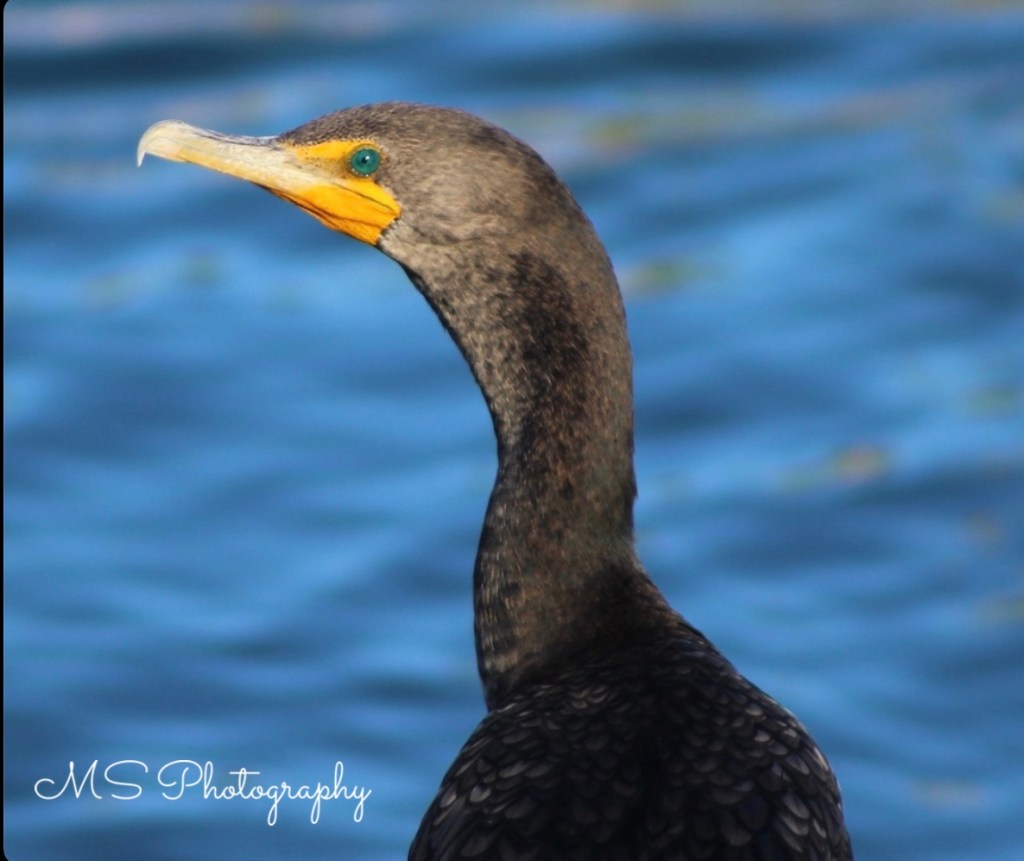
As a photographer, one of my favorite things to do is “birdwatching”. I really enjoy it and the different types of birds that I have seen was more than I thought existed.
I figured since I am capturing them all on film that I would do a little research and learn about them. So, here we go.
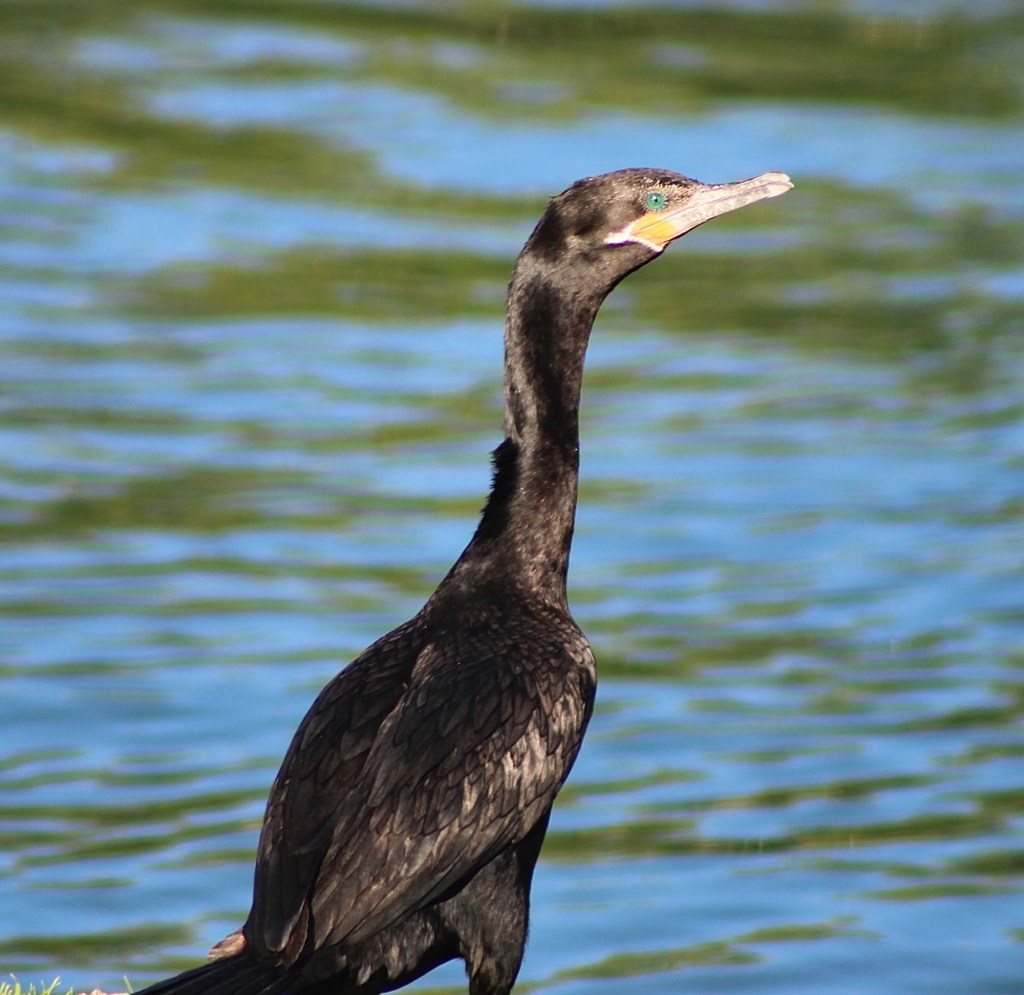
The Cormorants are a large waterbird with small heads on long, kinked necks. They have thin, strongly hooked bills, roughly the length of the head. Their color patterns are for the adults are brown, black with a small patch of yellow-orange skin on the face. The younger ones are browner overall, palest on the neck and breast. When they enter their breeding season, adults develop a small double crest of stringy black or white feathers.
Their sizes can vary.
Measurements
Both Sexes
Length: 27.6-35.4 in (70-90 cm)
Weight: 42.3-88.2 oz (1200-2500 g)
Wingspan: 44.9-48.4 in (114-123 cm)
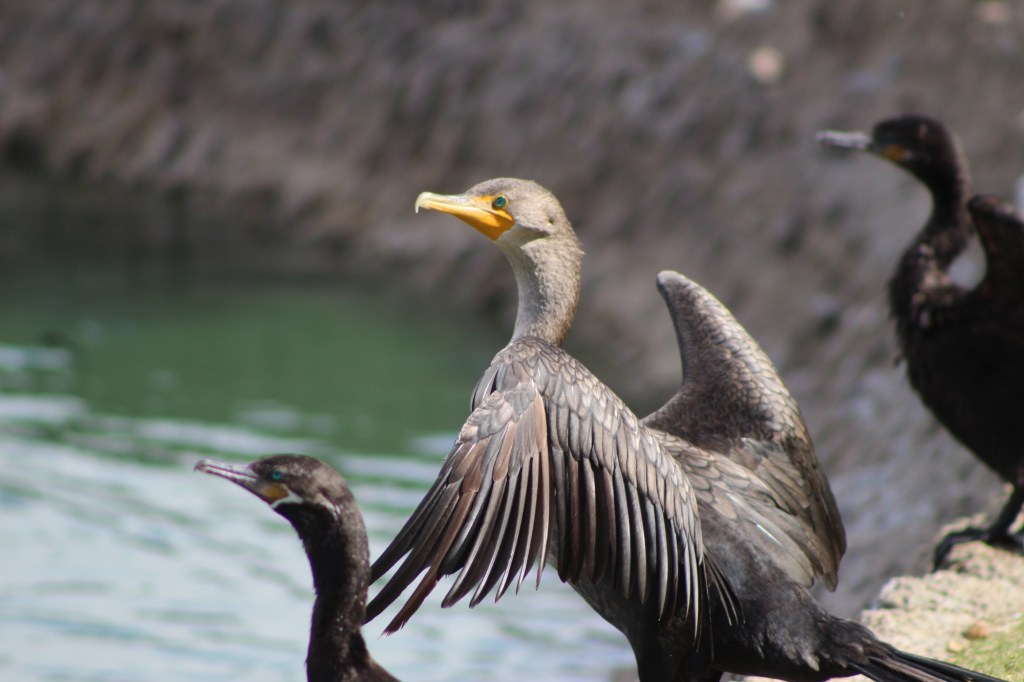
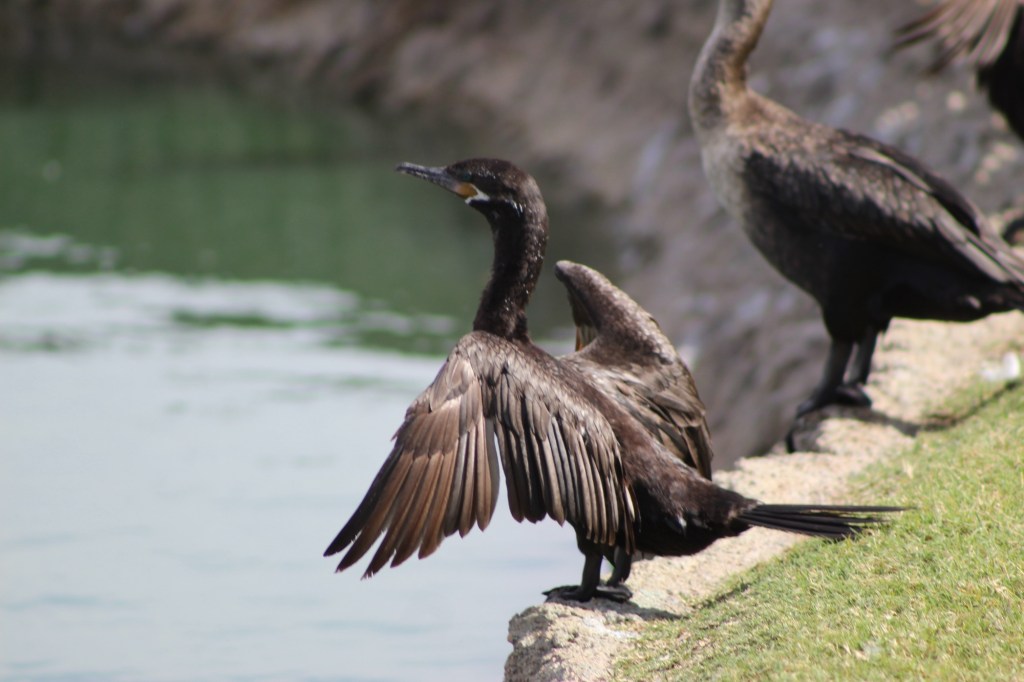
Their behavior is floating low to the water to grab small fish for food. When they aren’t fishing, they will stand on docks, rocks, and tree limbs with wings spread open to dry.
In flight, they often travel in V-shaped flocks that shift and reform as the birds alternate bursts of choppy flapping with short glides.
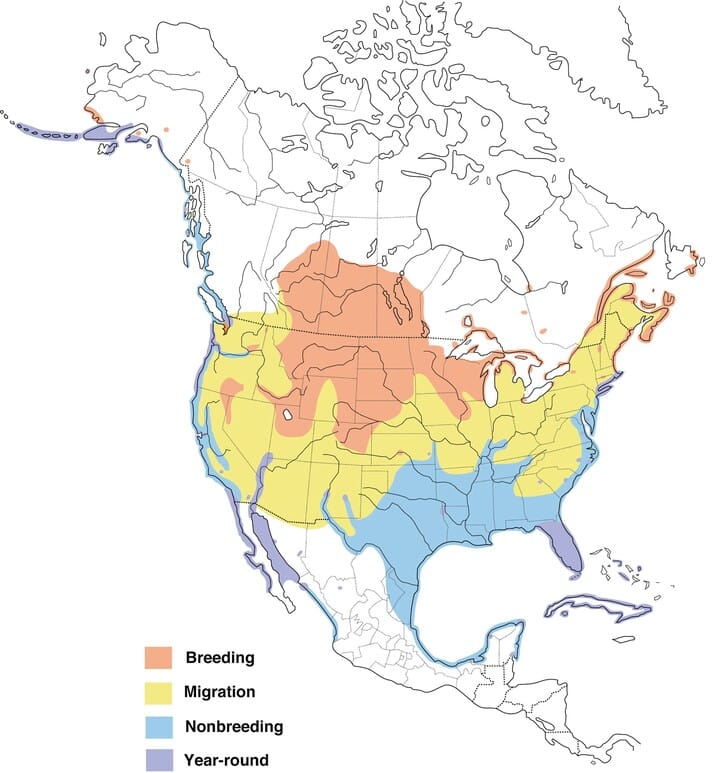
Below is a layout of their habits and locations.
Some cool facts I found that were interesting
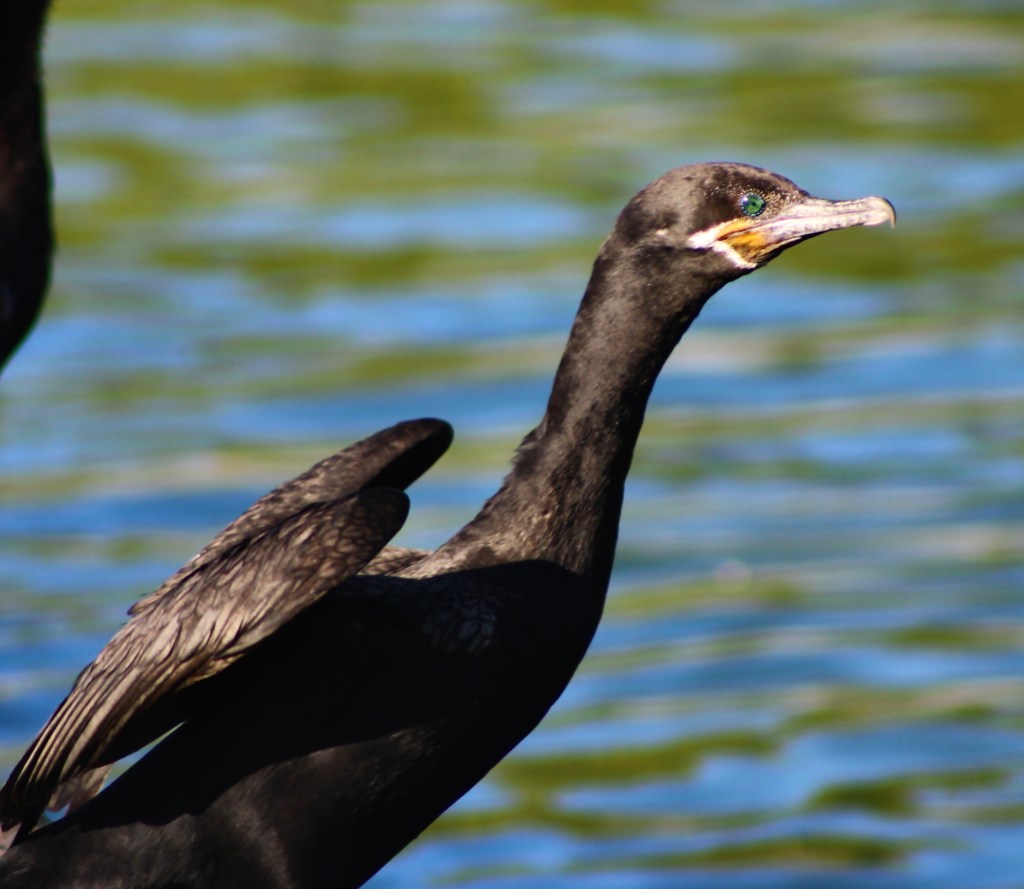
- From a distance, Double-crested Cormorants are dark birds with snaky necks, but up-close they’re quite colorful—with orange-yellow skin on their face and throat, striking aquamarine eyes that sparkle like jewels, and a mouth that is bright blue on the inside.
- The double crest of the Double-crested Cormorant is only visible on adults during breeding season. The crests are white in cormorants from Alaska and black in other regions.
- Cormorants often stand in the sun with their wings spread out to dry. They have less preen oil than other birds, so their feathers can get soaked rather than shedding water like a duck’s. Though this seems like a problem for a bird that spends its life in water, wet feathers probably make it easier for cormorants to hunt underwater with agility and speed.
- Double-crested Cormorant nests often are exposed to direct sun. Adults shade the chicks and also bring them water, pouring it from their mouths into those of the chicks.
- In breeding colonies where the nests are placed on the ground, young cormorants leave their nests and congregate into groups with other youngsters (creches). They return to their own nests to be fed.
- Accumulated fecal matter below nests can kill the nest trees. When this happens, the cormorants may move to a new area or they may simply shift to nesting on the ground.
- The Double-crested Cormorant makes a bulky nest of sticks and other materials. It frequently picks up junk, such as rope, deflated balloons, fishnet, and plastic debris to incorporate into the nest. Parts of dead birds are commonly used too.
- Large pebbles are occasionally found in cormorant nests, and the cormorants treat them as eggs.
- The oldest known Double-crested Cormorant was at least 23 years, 8 months old. It was banded in Oregon in 1997 and spotted by a bird watcher in Washington in 2021.
I really enjoyed photographing this bird. It was surprisingly patient and allowed me to get close enough to make some beautiful captures.
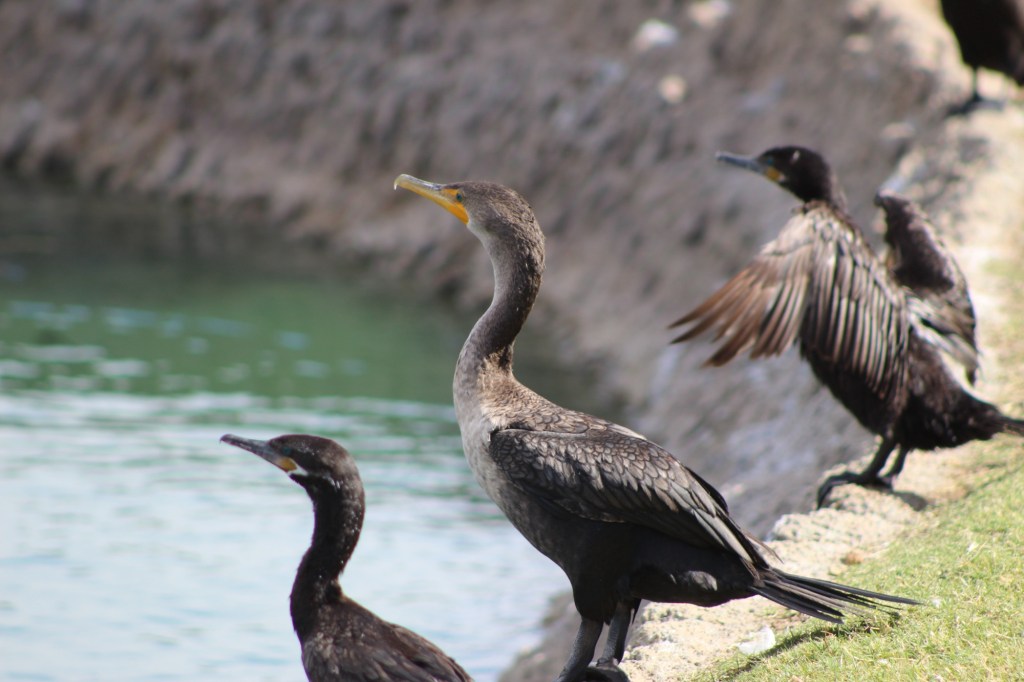

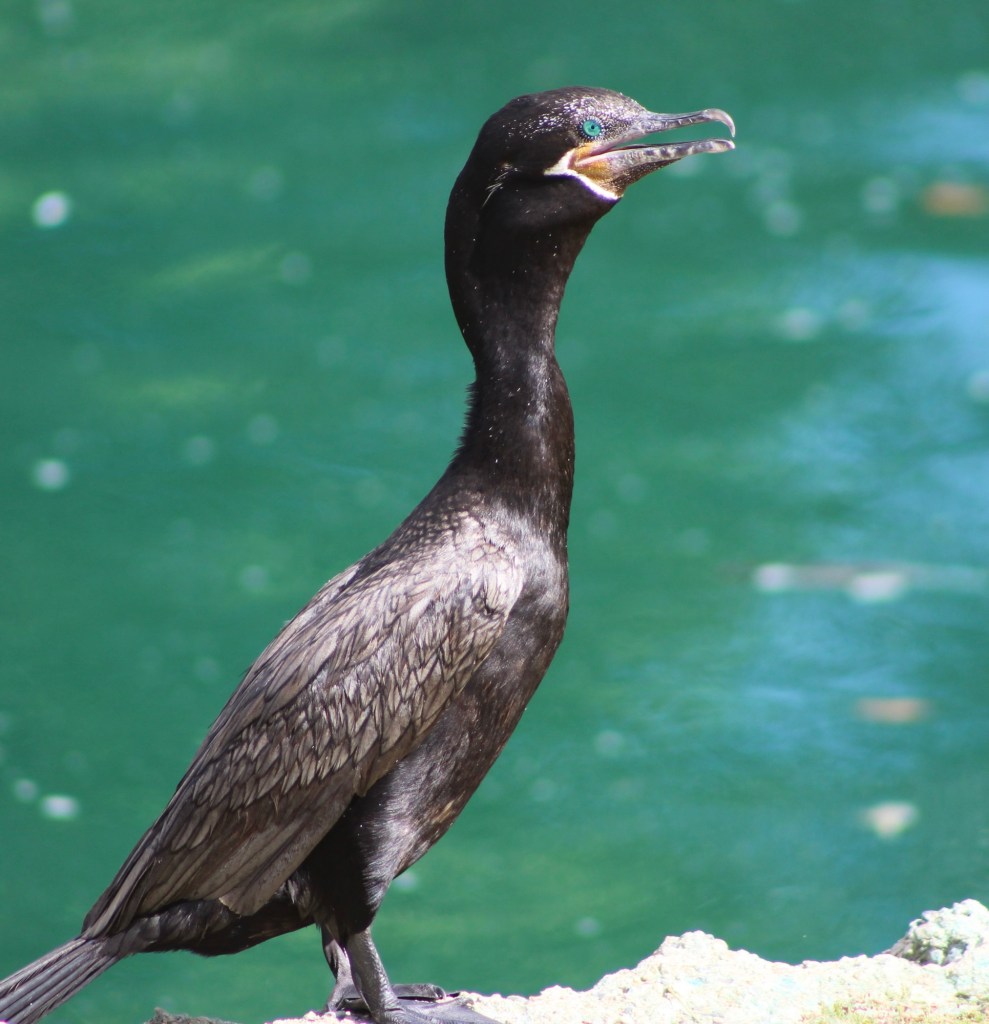
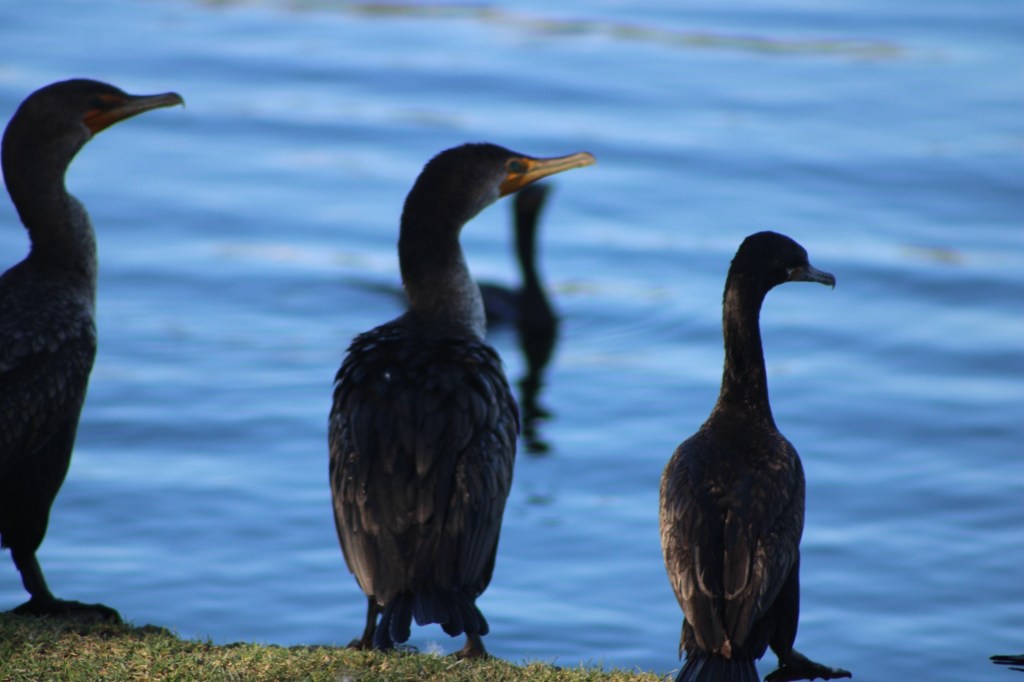
For the Images I have a Canon Eos Rebel T7. The lens was 300 mm that allowed me to capture them from respectable angles.





 Throughtful Reader
Leave a reply to theorangutanlibrarian Cancel reply