• The Barrister Building: A small piece of cinema history

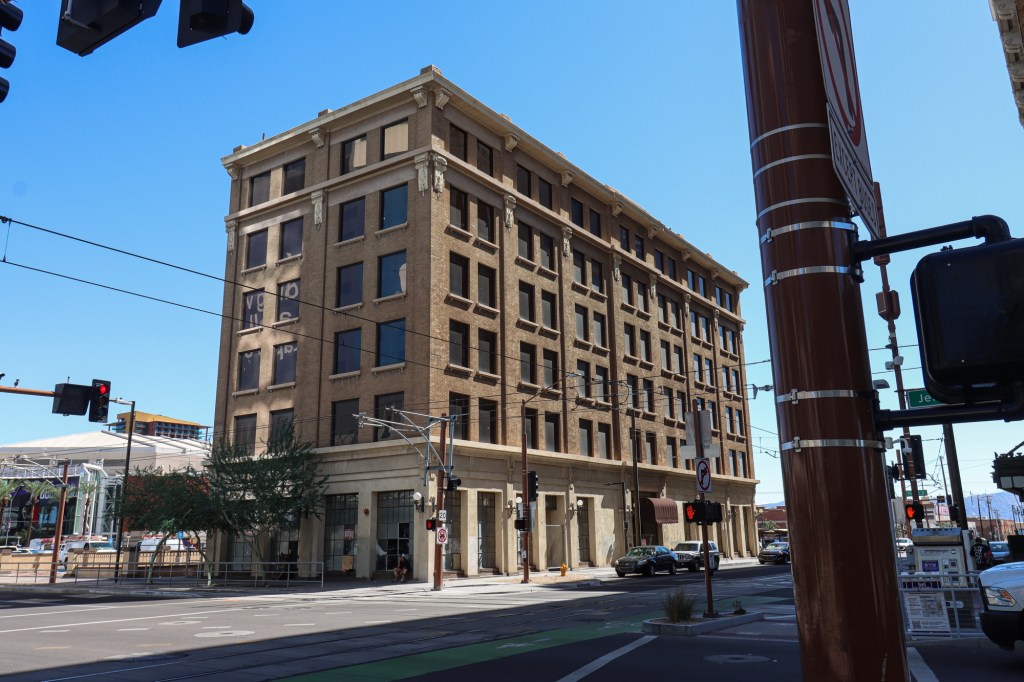
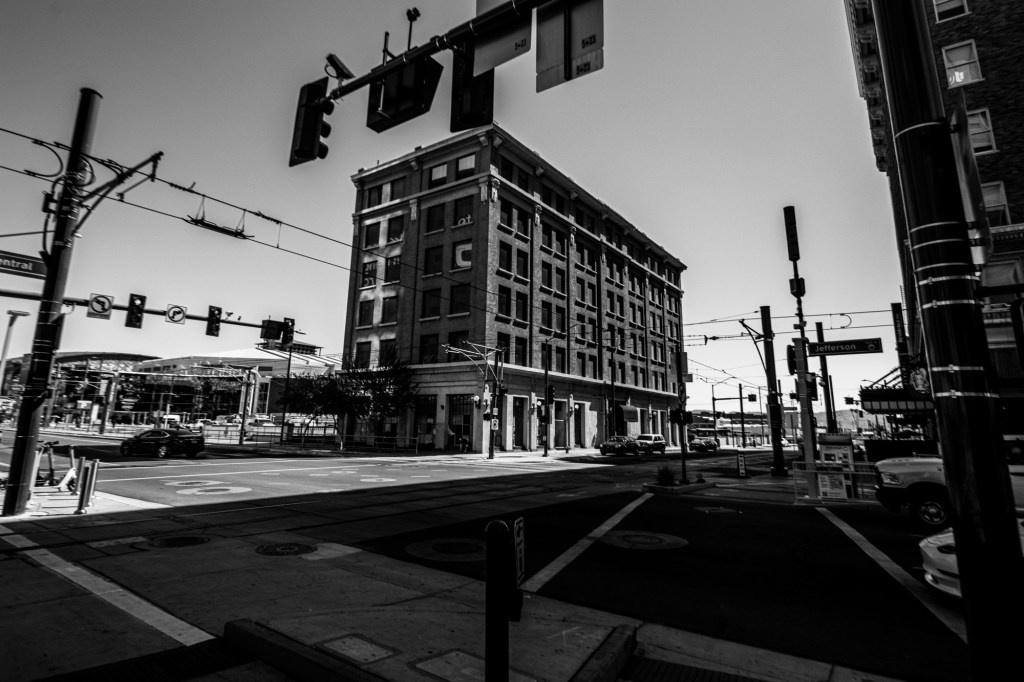
    The Barrister building has a wide and dubious history, I was in the city doing shots of som of the buildings of significance. This on I had no idea until looked it up.

    1913-1915

    In 1913, Salem Ackerman, a successful Syrian immigrant, decided to relocate his dry goods store and purchase a lot at Central Avenue and Jefferson Street.

    Initially planning for the 3-story fireproof store, Ackel revised the plans to the 6-story hotel and hired architect Frederick C. Hurst, who specialized in reinforced concrete work.

    Construction spanned 21 months, resulting in the 1915 opening of the 6 story Jefferson Hotel, the tallest building Arizona at the time.

    1915: Grand Opening and Features

    As mentioned, the Jefferson Hotel would open in 1915. It would boast 150 rooms, marble and tile finishes, a main entrance designed as a luxury space, and an acclaimed rooftop garden which quickly gained popularity. Room prices ranged from $1-$3 per night.

    The Arizona Republic featured a special 6-page issue celebrating its opening as an epoch-making for the Southwest hotel industry.

    1919: Rumored Expansion

    By 1919, the hotel’s success sparked rumors of a potential annex, though no expansion was ultimately made.

    1960: Cultural Fame- Guest appearance in the “Psycho”

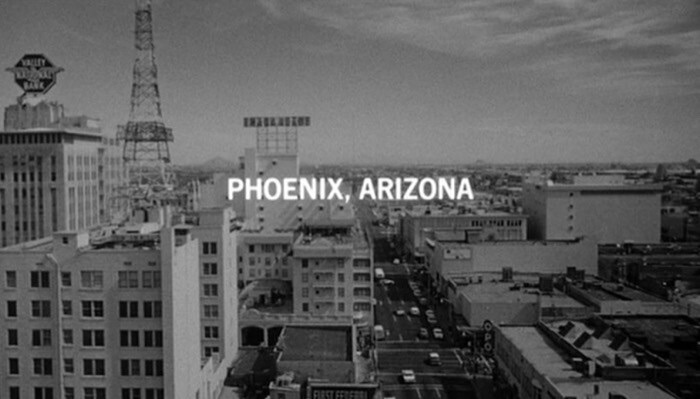
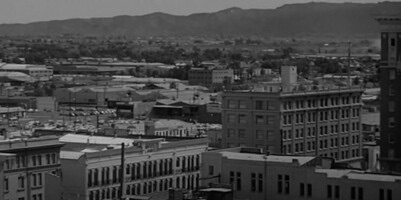
    The Jefferson Hotel gained notoriety with its brief appearance in the opening sequence of Alfred Hitchcock’s 1960 film “Psycho,” depicting downtown Phoenix’s skyline.

    Opening scene
    Barrister Building

    1975: Decline and Auction

    The hotel closed in 1975 following the decline of downtown Phoenix as a commercial hub. Its furnishings were auctioned off after closure.

    1979: Barrister Place Era

    Purchased and gutted by the new owners in 1979, it was renamed Barrister Place in a bid to attract legal firms, building remained largely vacant.

    1989-2012: City Ownership and Reuse

    In 1989, it was leased and later purchased by the City of Phoenix. Phoenix’s Police would open their museum on the ground floor in 1995. City offices occupied the building until 2010. The museum was removed in 2012.

    2015-2018 Sale Redevelopment

    In 2015, the city sold the building to the private developers for mixed-use redevelopment, which initially stalled. High-end condominiums, shops, and restaurants were developed, with efforts to preserve the original facade in 2015.

    2018-Present Ongoing Restoration and Legacy

    Today, it is now known as Jefferson Place or Barrister Building, it remains a downtown landmark, with luxury residences ad preserved historic character. The redevelopment reflects adaptive reuse trends in downtown Phoenix while maintaining the original building’s legacy and appearance.

    Barrister Building present daylight

  • The Westward Ho: Once the tallest building in Phoenix

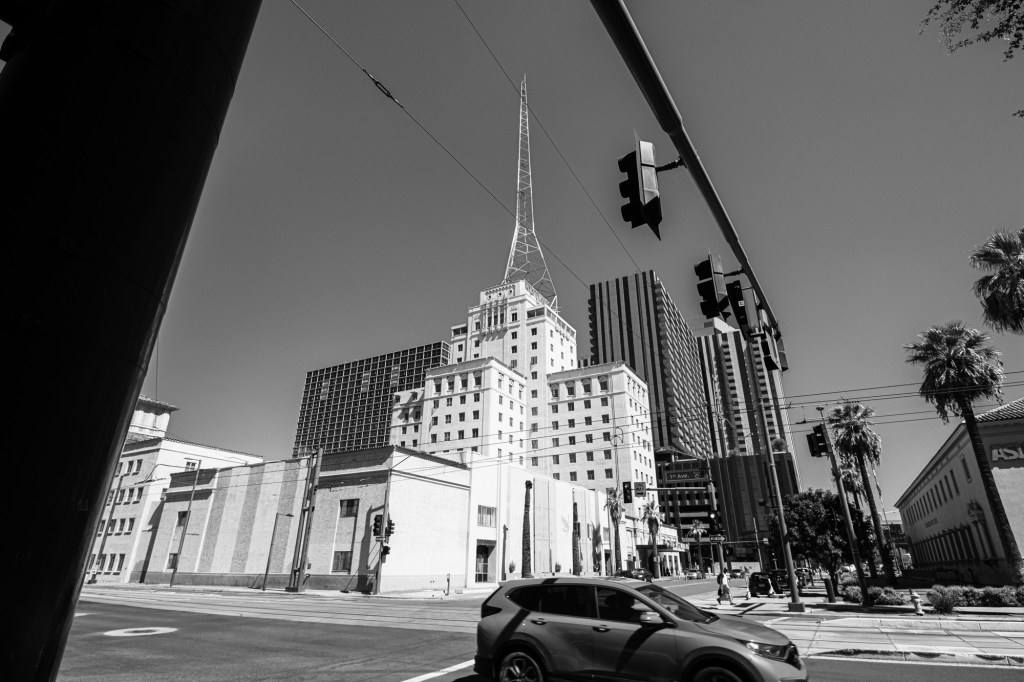
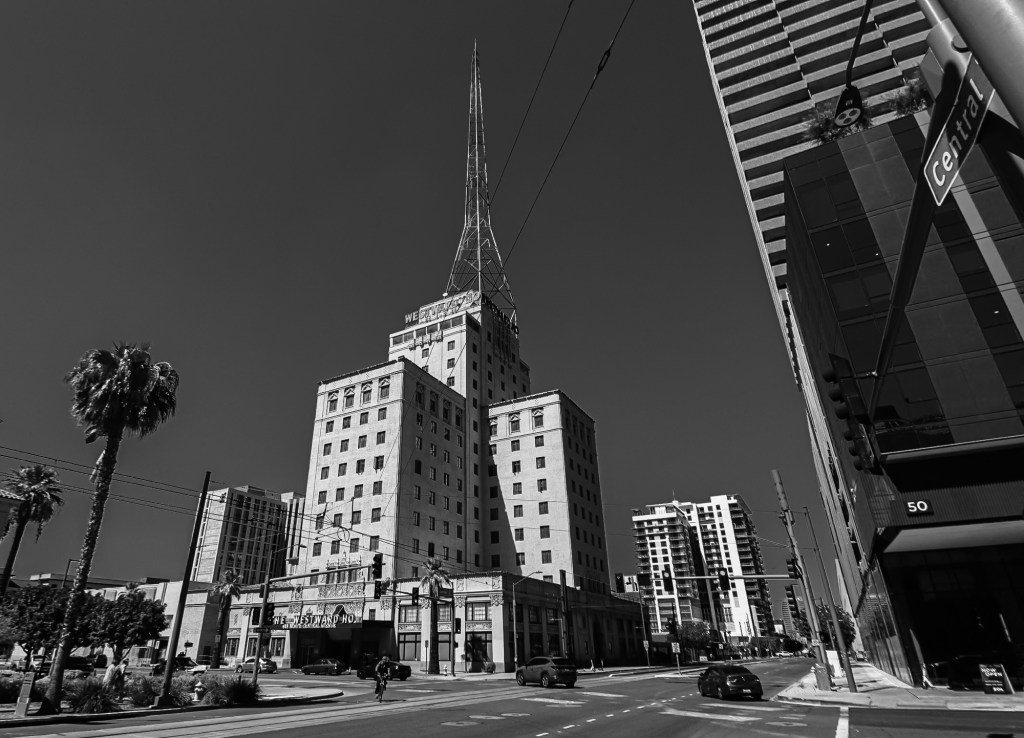
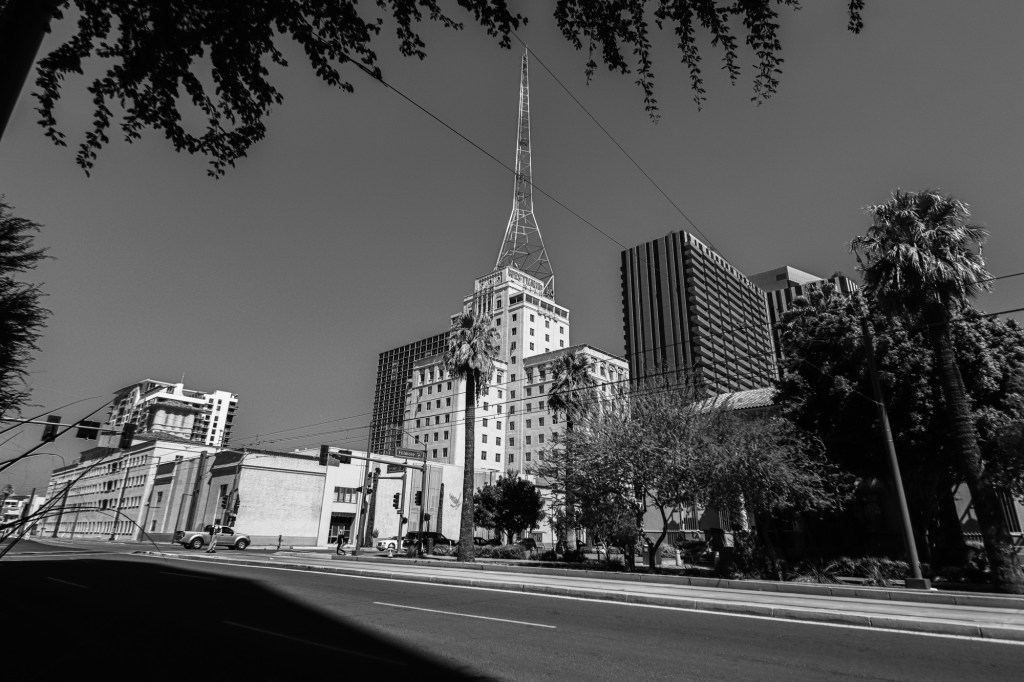
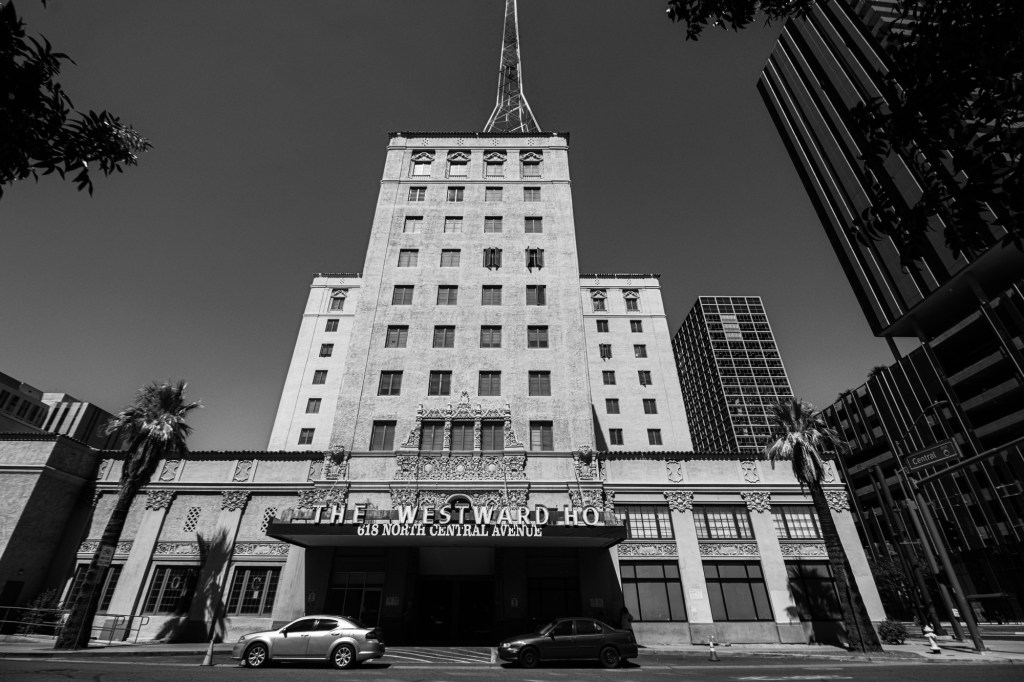
    I was in Phoenix doing some photography and was taking some shots of buildings. I was unaware that this building was the tallest in Arizona. I figured a little research on it would be fun. Here is what I found.

    Westward Ho Building

    The Westward was built in 1927-28 and opened on December 15, 1928, The original name was the “Roosevelt Hotel” but was changed due to financial complications , delayed construction, and shifting owners names. Famous developer Del Webb (of Arizona) would get their start on this project. Webb himself would expand the building, which was omitted from the official narratives.
    When it opened in 1928 it’s as $2 a night when many other hotels were charging 25 cents, reinforcing its exclusive status but possibly deterring locals and creating its reputation for exclusion.

    The hotel was the site of unexplained deaths, both accidental and suicides. Sadly, little was found in the verified records,

    During its years as a hotel, the Westward was reputed to have hosted famous and controversial celebrities. Rumors included visitors like Marilyn Monroe, and gangsters like Al Capone. However, these stories aren’t verified as of this writing.

    Paranormal claims have been mentioned. Residents and former staff members have attested to seeing ghosts, and a supposed “lady-in-red.” She was a one-legged ballerina, spectral children. strange noises, and flickering lights. This would fuel the building’s legacy as one of Phoenix’s most haunted locations.

    After the hotel closed in 1980. It was transitioned to a federally subsidized facility for seniors and the disabled. This was done partly due to the years of dwindling occupancy and unreported financial difficulties.

    Today, it is still primarily a residence for elderly and disabled tenants, strong security and privacy rules make it difficult for any curious or former guests to visit, and many residents are uncomfortable with outsiders discussing the building’s paranormal legacy.

  • Our RV Journey: Tips for New Owners

    This summer, we purchased an RV. We had always been interested in owning one to use for travel. When we went to an RV show at State Farm Stadium earlier this year, we knew that we wanted one for sure.

    We researched, inspected, and found one that met our needs. It was a 2022 Dodge Ram Ethos. It was a simple RV for a party of two.

    Owning an RV is a little different than owning a car. You have your typical vehicle maintenance, but there are also some other items you need to check and maintain. This RV has two batteries that must be carefully watched and charged. We would learn this lesson the hard way, but it did work out after a recent trip to the RV mechanics.

    Before we picked it up, we received a brief tutorial on how to use it. The water and waste system was a big one, and one that could save you a trip to the ER if you aren’t careful.

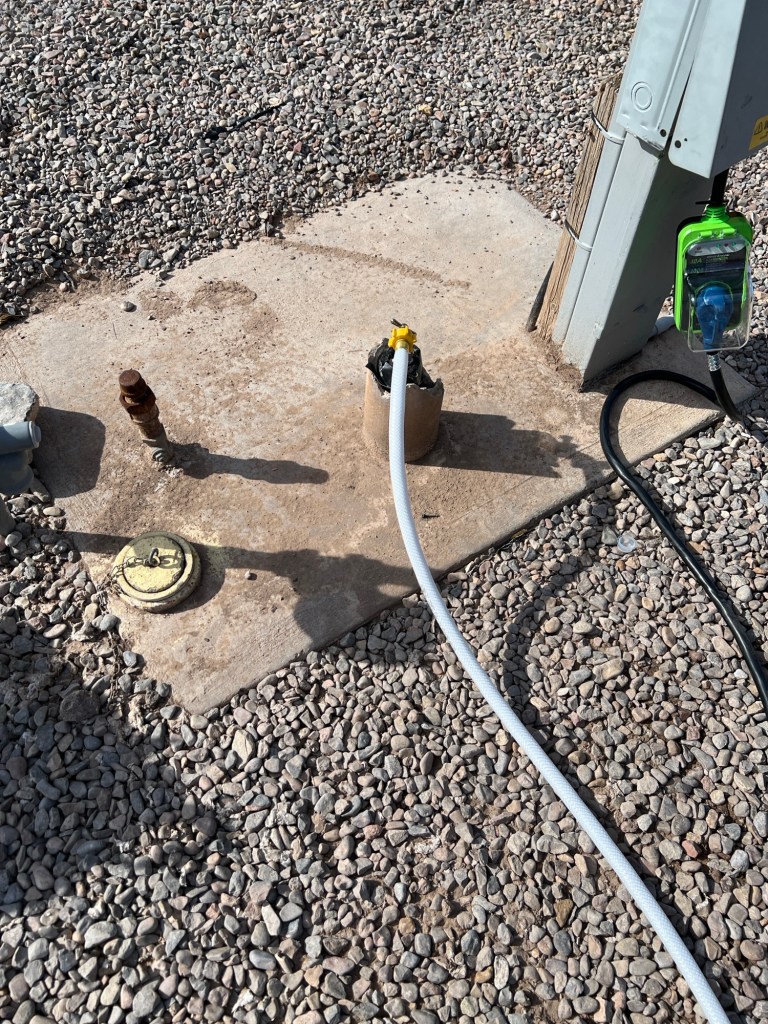
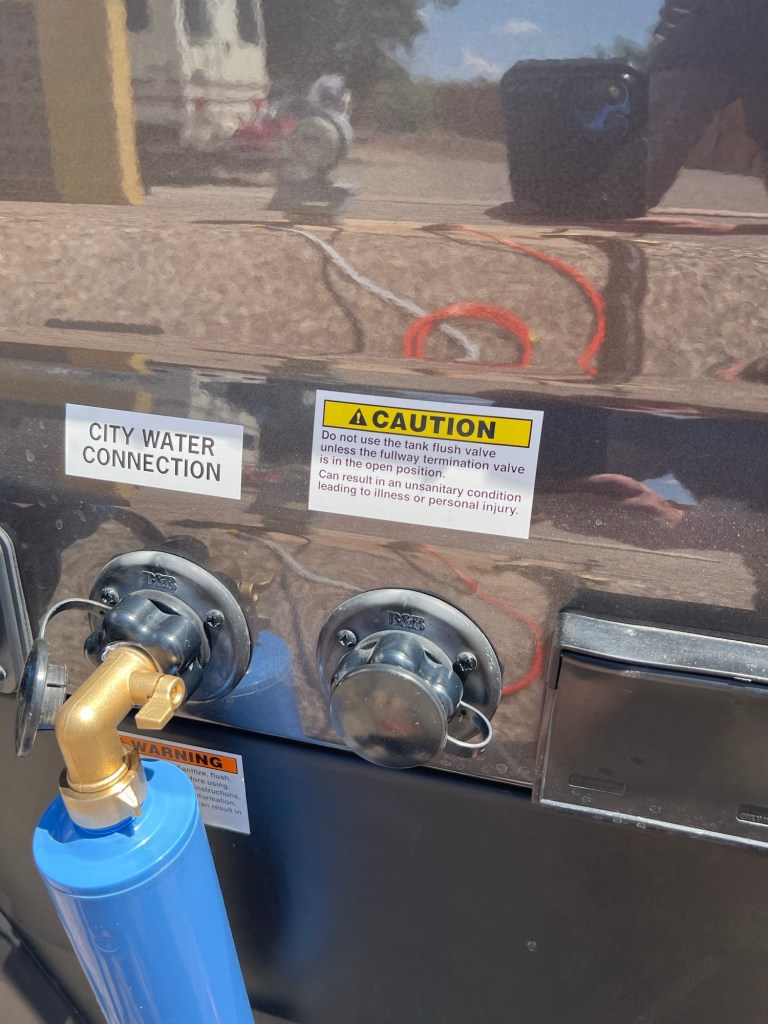
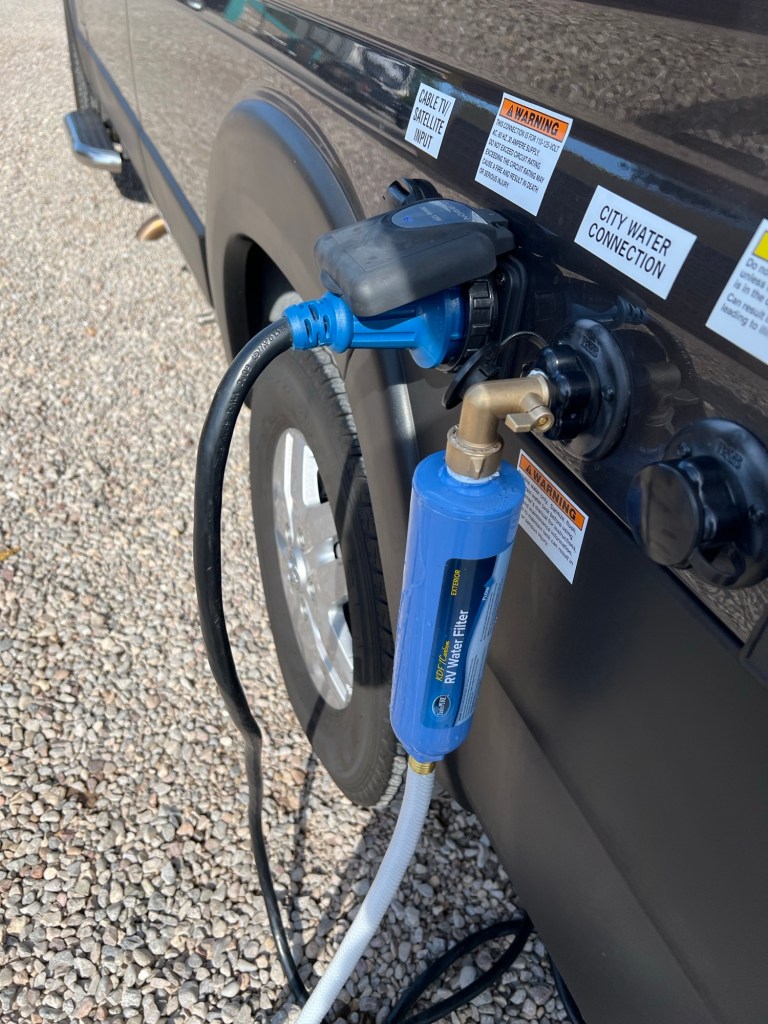
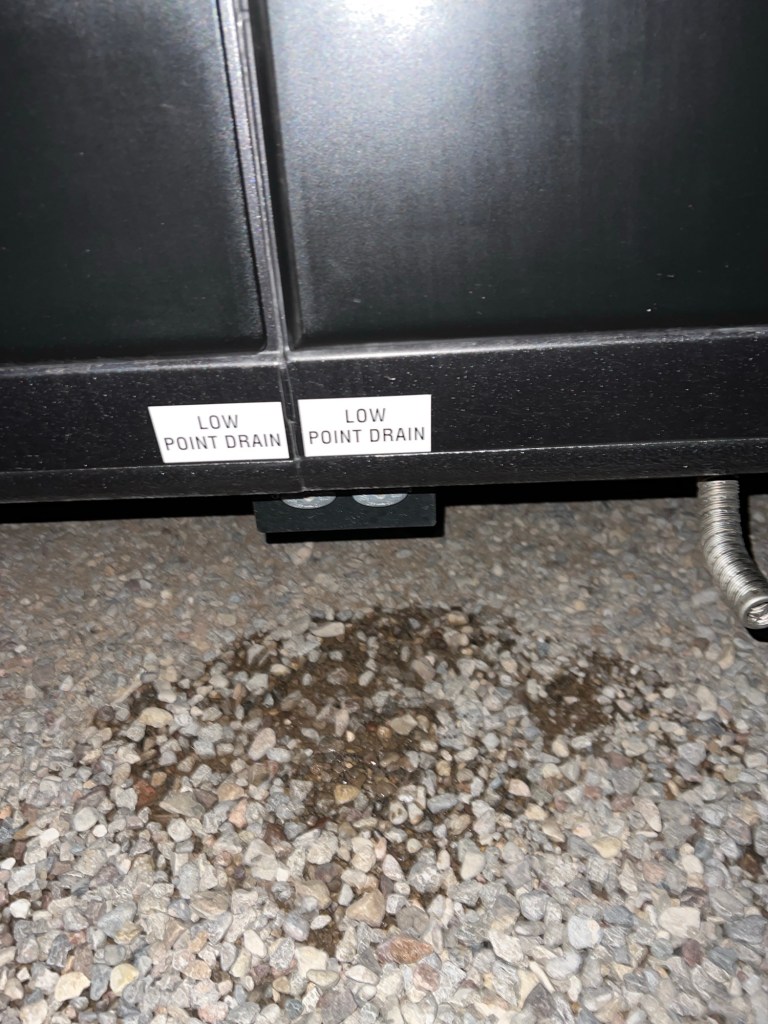
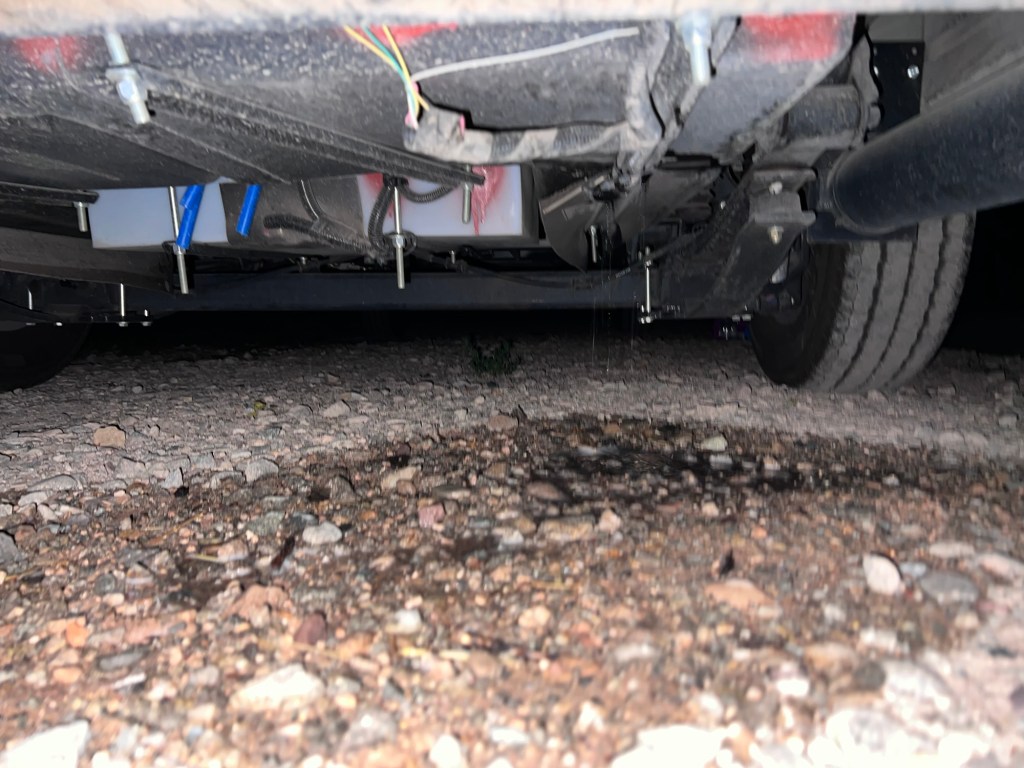
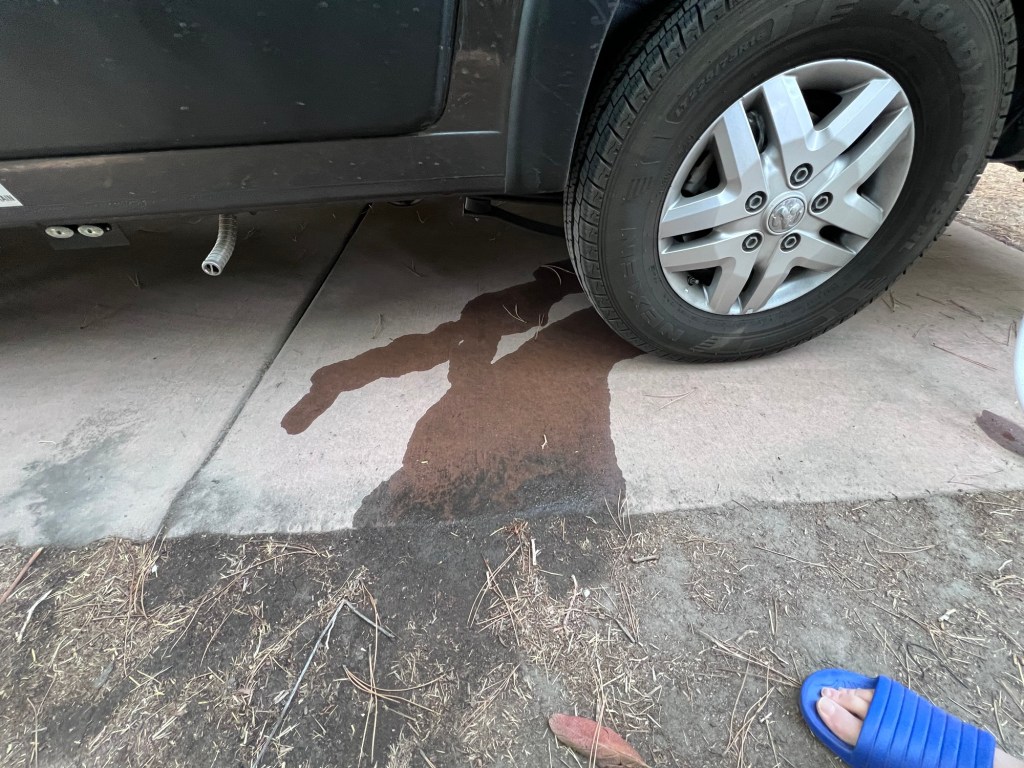
    We were shown how to utilize the water source and which specific connection to use. As you can see in the first one, there are two and they are clearly labeled. The first one is for the city or whatever water site you use for camping. The second connection is used for when you are draining and cleaning out the waste tank from your bathroom trips (I won’t go too deep into this detail). For the waste, you will need a Slinky that will drain from the tank to the sewer at the site. (Wear gloves and shoes, as it can be messy.) Also, note that when hooking up the water from the source to the van, you will need a water regulator valve. The reason for this is that sometimes the pressure from the local water source can be too much. This can overwhelm the pipe systems and cause leaks, as shown in the images below.

    The electrical wasn’t too tricky. Our RV required a 30-amp. All RV stops or locations will typically have plugs for 20-, 30-, and 50-amp services. Be sure to know the difference between the three. the progs for each plug will help simplify the difference when using.

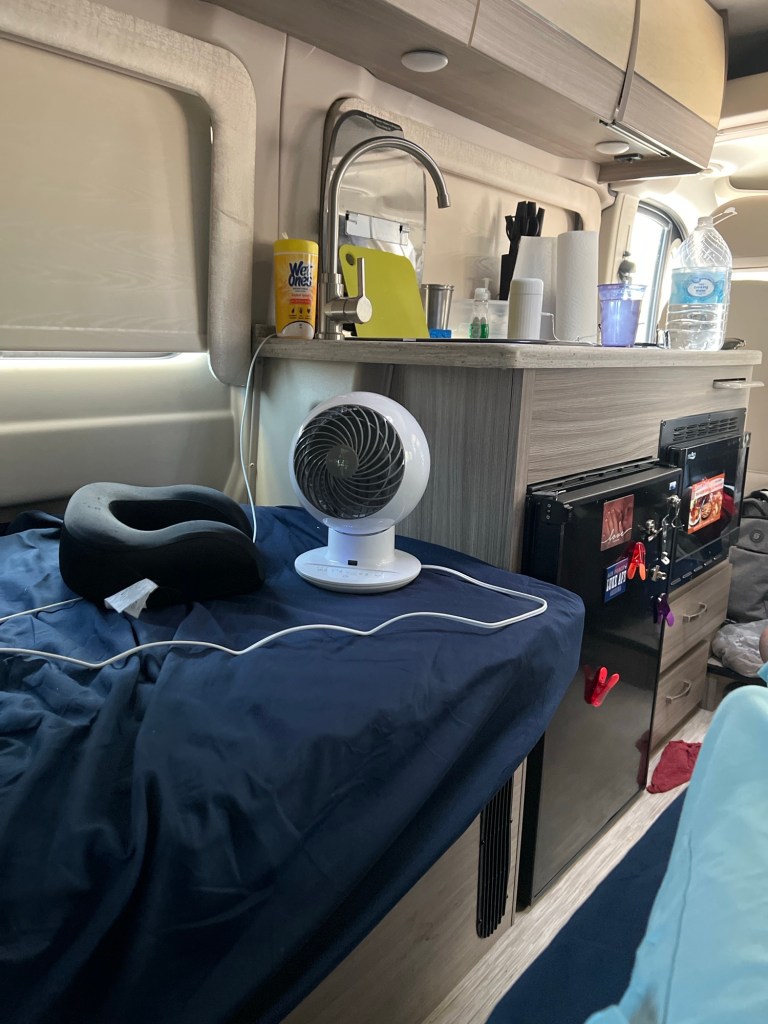
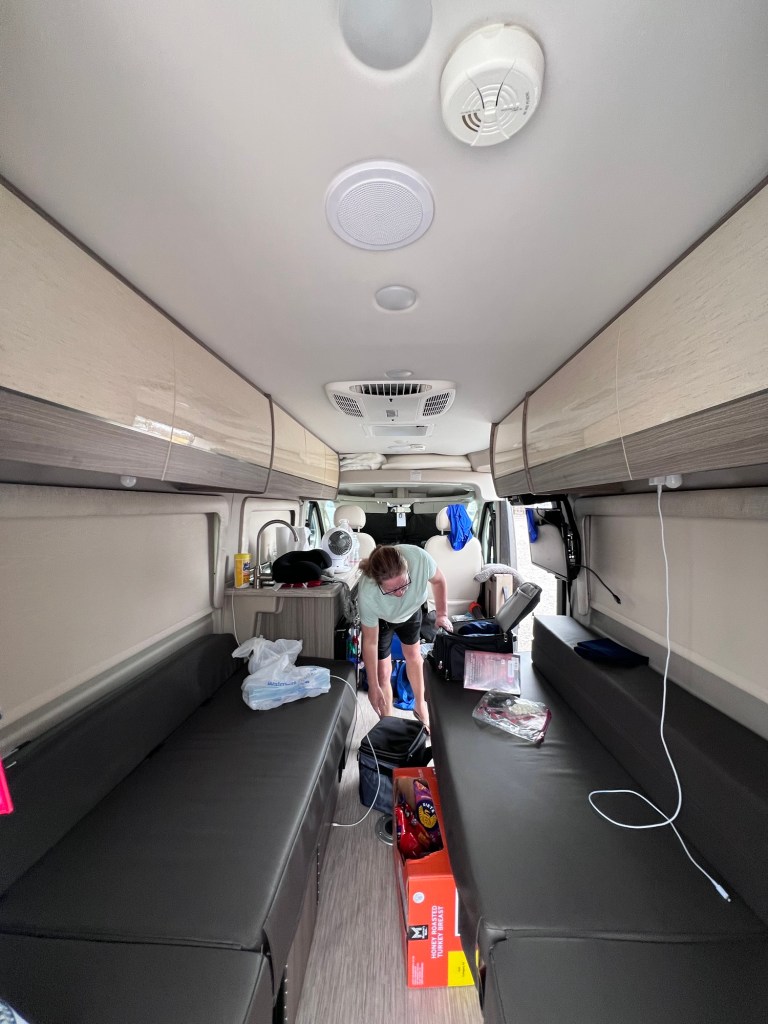
    Moving on, we cover the interior. It has a nice kitchen set for us to use and two side couches that can be converted into a bed.

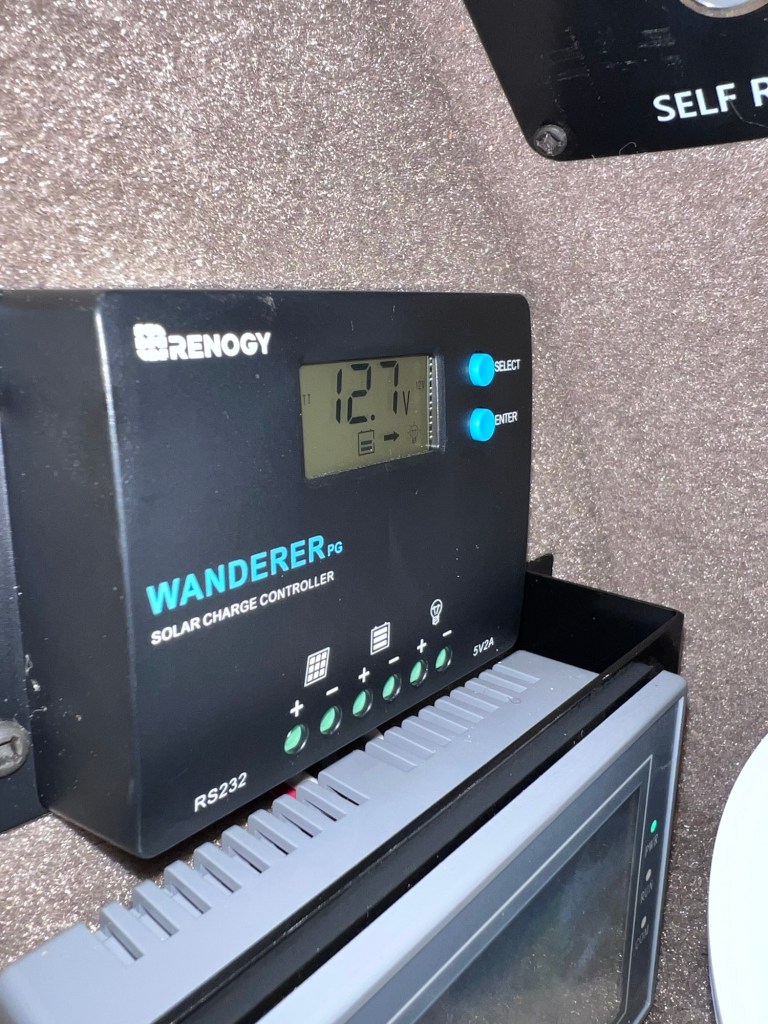
    Surprisingly, it wasn’t tough to operate, but there is one thing that will drive an RV owner crazy, and I will dive into it. Remember when I mentioned the Battery? Well, you would think something like a battery would be simple, but the joke was on me. The battery is well powered, but the solar panel on top is only there to keep it from dying. Obviously, when you are traveling, you want to have it hooked up to a live source when you reach a campsite, but this one has another nice perk. The battery will also charge while driving. However, keep in mind that if the battery gets too low, the system it is connected to will lock itself out for self-preservation. I learned that when we had some repairs at an RV repair shop (I will leave out the business’s name). They sadly left my battery on to the point where it almost died. Luckily, the one it is currently at was able to repair it, and it saved the batteries. Thank God, that would have been a lot of money to replace.

    Be sure to keep a close eye on these. The numbers aren’t always accurate. The Rynogy screen is accurate, but only to a certain extent. Ensure the software is up to date and the program is running. The Sam Koon is more accurate and will also provide information on how many amps you are pulling or bringing in. Always keep an eye on it.

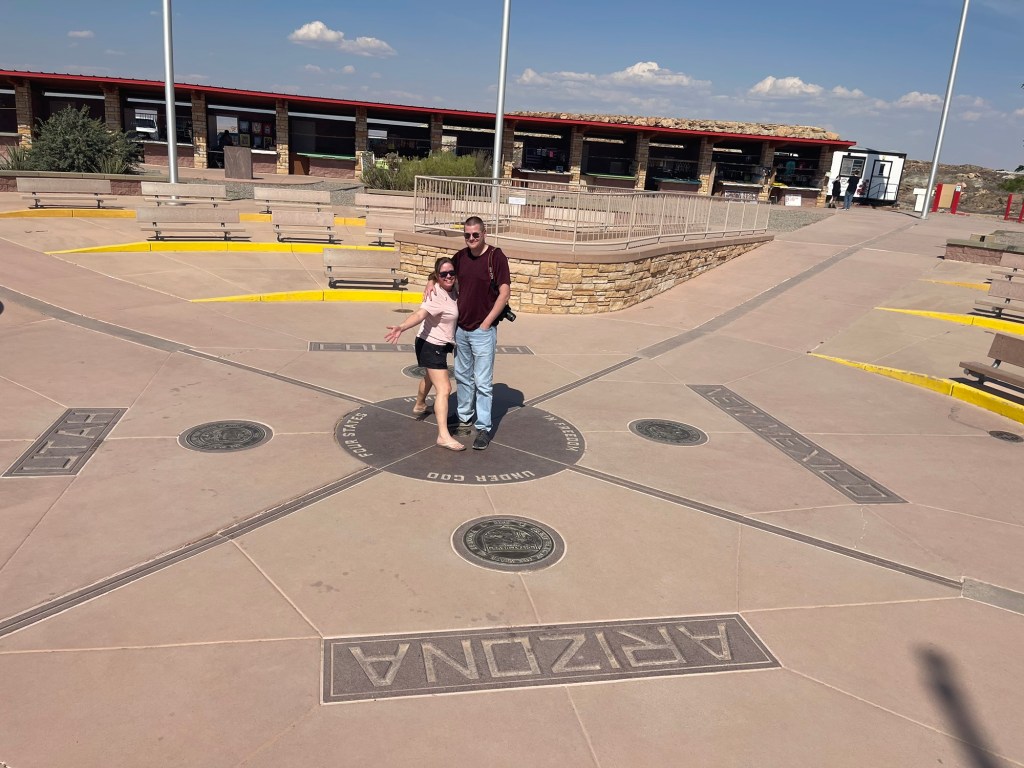
    We have been able to take some trips with it. We went to New Mexico, Colorado, and Utah. Good trips to see the landmarks and even saw some good friends.

    Despite the early headaches and some shady business ethics from the seller, we have no regrets. We have learned a lot and even learned how to handle it together without any headaches or disagreements.

    We plan to make more road trips and create more memories soon. Hopefully, these early headaches and glitches will be rare and minimal in regard to the stress. If you are looking to get one in the future. i would recommend researching very carefully and also doing background checks on the Sellers. Whether it’s a private or a business, make sure you know who you are doing business with.

  • Batman Resurrection: A spirited Sequel to Tim Burton’s hit 1989 movie

    Author John Jackson Miller

    Pages 419 pages

     When I watched the movie, I found myself thoroughly enjoying it. I was invested in the characters and the story that was written. The performances stood out, such as Michael Keaton’s Bruce Wayne/Batman, Jack Nicholson’s Joker, and Kim Basinger’s Vicki Vale. I recalled leaving the theater and wondering if the sequel would be just as good, and whether they would explore the relationship between Bruce and Vicki. Sadly, we would find out in Batman’s Return that they would go their separate ways with no explanation or reason.

     Well, in Batman Resurrections, we get a chance to see what happened between the two movies.

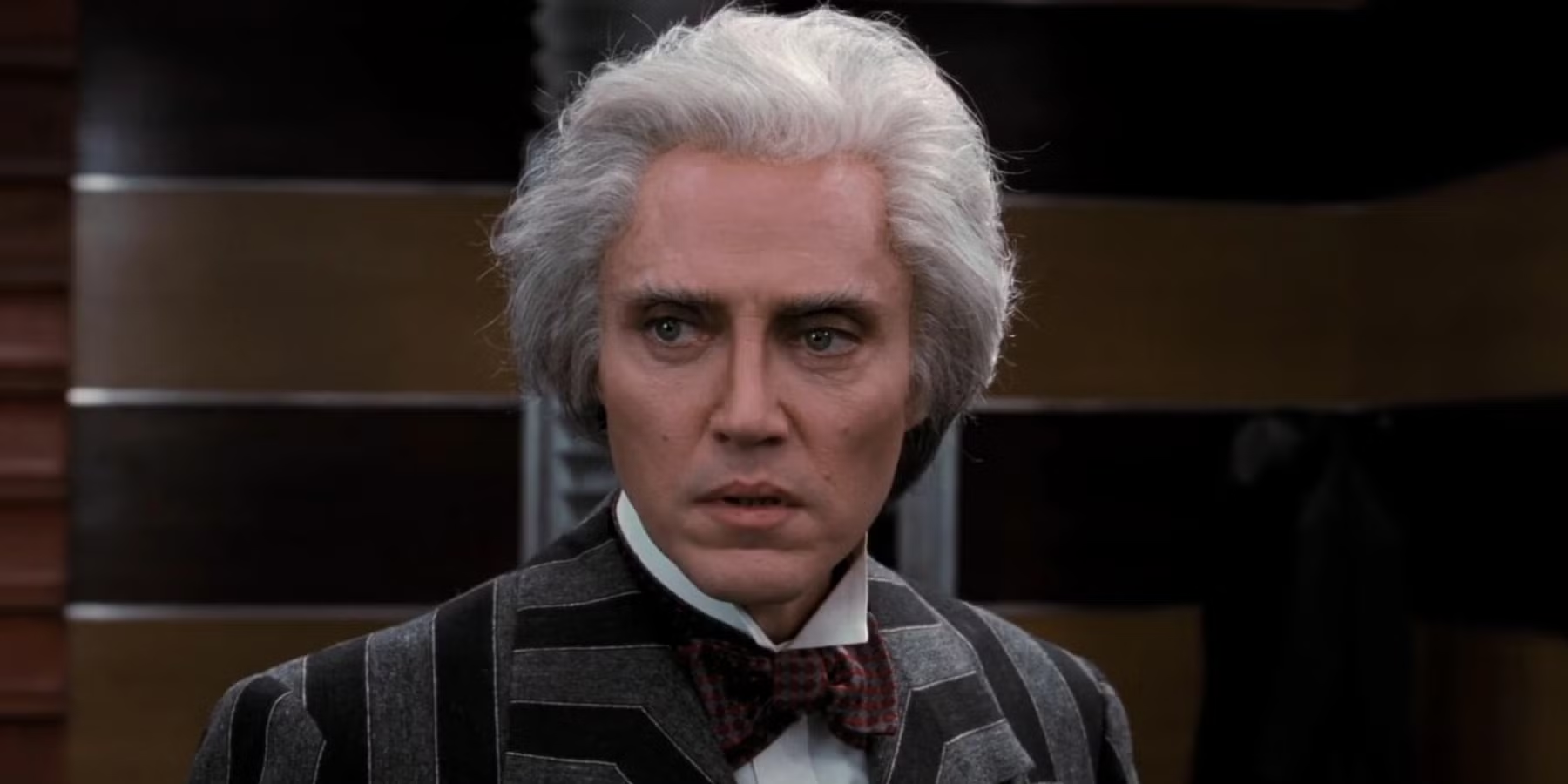
     The story takes place months after the end of Batman. We find that since The Joker’s demise, his gang has broken into smaller factions. One is trying to one-up the other in succeeding their former boss’s legacy. There are also new players in the mix. A former actor who was damaged by chemicals can turn himself into other people and calls himself “Clay Face.” Max Shreck, who would be in Batman Returns, and we learn that he also has his own ulterior motives to cash in on the chaos. Finally, there is also fear that a new Joker has appeared to carry on, or he is the Joker that Bruce thought he had thrown off the chapel balcony some months ago.

     Complicating this mess of an adventure for Bruce is the return of Vicki Vale. When we left the movie, we saw them together. Now, we find them in a place of distance but understanding. The realization of Bruce’s commitment is clear to Vicki, but can she move past that to give their relationship a chance to survive? Of course, how could I forget his loyal companion mentor, Alfred. His role in this story is his ability to keep Bruce in check and aware of his life beyond the suit.

     I enjoyed the book for the most part. He gave Burton’s work respect and did his best to honor the original story while presenting a new one in the same universe. However, I felt overwhelmed by the villains. From Clay Face, Schreck, The Joker’s henchmen, and even Hugo Strange made an appearance. The author attempted to explore the Bruce and Vicki relationship, but I wish he had delved deeper into it, rather than just towards the end of the book. He does a good job with Gotham’s reporter, Alexander Knox. He provided an interesting character in this book; his constant banter with Bruce throughout the book was the highlight for me (Note, Bruce never gave him the grant he asked for in the film). That was the best line to read.

      While I won’t spoil the ending, I will say that I recommend this book, but only to the dedicated fans of the movie who are interested in following the story. There is a sequel that follows this. It is scheduled for release in October of this year and is called “Batman Revolutions.” I hope he can work on the minor details and add more to the story.

  • The Real Medicare Waste: It’s Not Who You Think

    When Republicans talk about Medicare waste, they rarely mention the corporations and systemic inefficiencies that cos billions.

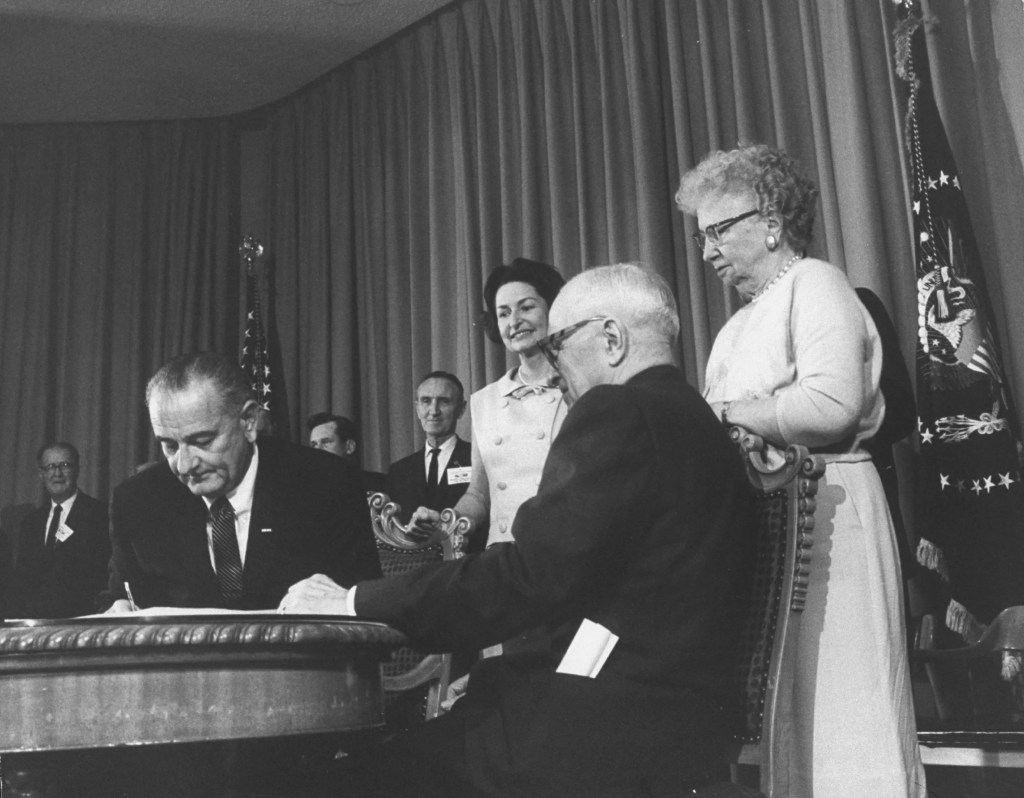
    Medicare was signed into Law on July 30, 1965, by President Lyndon Johnson. It was a moment of important change. The program was established to address the lack of adequate protection for the elderly against the high cost of healthcare, a significant gap in the social insurance system at the time. Before this, there was no real safety network for elderly Americans to afford healthcare. This led to financial hardships. In 1972, Medicare was expanded to help cover those with end-stage renal disease and for younger adults who were disabled.

    Above, President Lyndon Johnson signed Medicare into law. Former President. Harry Truman and First Lady Bess Truman received the first Medicaid cards.

    Medicare has since been expanded to include the following.

    1. Medicare Part C (Medicare Advantage):

    • Introduced in 1997, Part C allows beneficiaries to choose private health insurance plans, such as HMOs and PPOs, to receive their Medicare benefits.
    • This expansion aimed to offer more choices and potentially lower costs for beneficiaries. 

    2. Medicare Part D (Prescription Drug Coverage):

    • Created in 2003, Part D provides prescription drug coverage to all Medicare beneficiaries.
    • This addressed the rising costs of prescription drugs and the need for affordable access. 

    3. Preventative Services:

    • The Affordable Care Act (ACA) in 2010 expanded Medicare coverage for preventative services, such as mammograms, diabetes screenings, and flu shots.
    • This aims to improve health outcomes and reduce long-term healthcare costs by focusing on early detection and prevention. 

    4. Other expansions and modifications:

    Eligibility rules and payment systems have also been modified to control costs and improve the efficiency of the program

    Over the years, Medicare has also expanded to cover other services, such as hospice care, mental health services, and home health benefits.

    The expansions were intended to improve access, efficiency, and affordability; they would also inadvertently open the door to new vulnerabilities. The situation would get worse as more private entities became involved. Over time, the Medicare program has grown in size, complexity, and cost. But when political leaders talk about “waste,” they often shift blame toward patients or low-income recipients rather than confronting the actual drivers of inefficiency.

    So where is the real waste?

    Despite what Republican talking points may say, the true source of Medicare waste doesn’t come from patients abusing the system. They came from fraud, inefficiency, and private sector exploitation. Here is what is actually going on:

    1. Fraud and Waste:

    Every year, Medicare loses $60 to $100 billion to fraud — and it’s not from individuals. It’s providers billing for services not rendered, falsifying diagnoses, or overcharging for treatments.

    • Common schemes: phantom billing, kickbacks, identity theft
    • Real example: Clinics billing Medicare for physical therapy sessions that never happened

    Source: National Health Care Anti-Fraud Association

    2. Improper Payments: Bureaucratic Misfires

    In fiscal year 2023, Medicare made $31.5 billion in improper payments, per the GAO. That includes overpayments, underpayments, or payments made without proper documentation — not intentional fraud, but bureaucratic sloppiness.

    Source: GAO Report on Federal Improper Payments

    3. Overutilization: When Too Much Care Becomes Waste

    Studies show up to 30% of U.S. healthcare spending is wasted — and that includes unnecessary tests, scans, and procedures. Providers may do this to avoid lawsuits (defensive medicine) or simply to boost billing.

    Source: National Academy of Medicine – Best Care at Lower Cost (2013)

    4. Medicare Advantage: Private Profits at Public Expense

    Medicare Advantage (Part C) — meant to offer “choice” — has become one of the biggest contributors to Medicare waste. Private insurers overbill the government by exaggerating how sick patients are through a practice called “upcoding.”

    • They also often deny necessary care more frequently than traditional Medicare.
    • Tens of billions are wasted while corporate profits soar.

    Sources:

    5. Administrative Waste: A Byproduct of Complexity

    The U.S. healthcare system wastes $265 billion annually on administration alone. Medicare contributes to this through:

    • Redundant billing codes
    • Complex documentation rules
    • Payment processing inefficiencies

    Source: JAMA – Waste in the US Health Care System (2019)

    When you hear Republicans lecture about “Medicare waste,” ask yourself: Are you blaming patients, or the corporations profiting from inefficiency and fraud? If we are serious about saving Medicare, we need to stop gaslighting and punishing the poor and start holding the real wasters accountable.

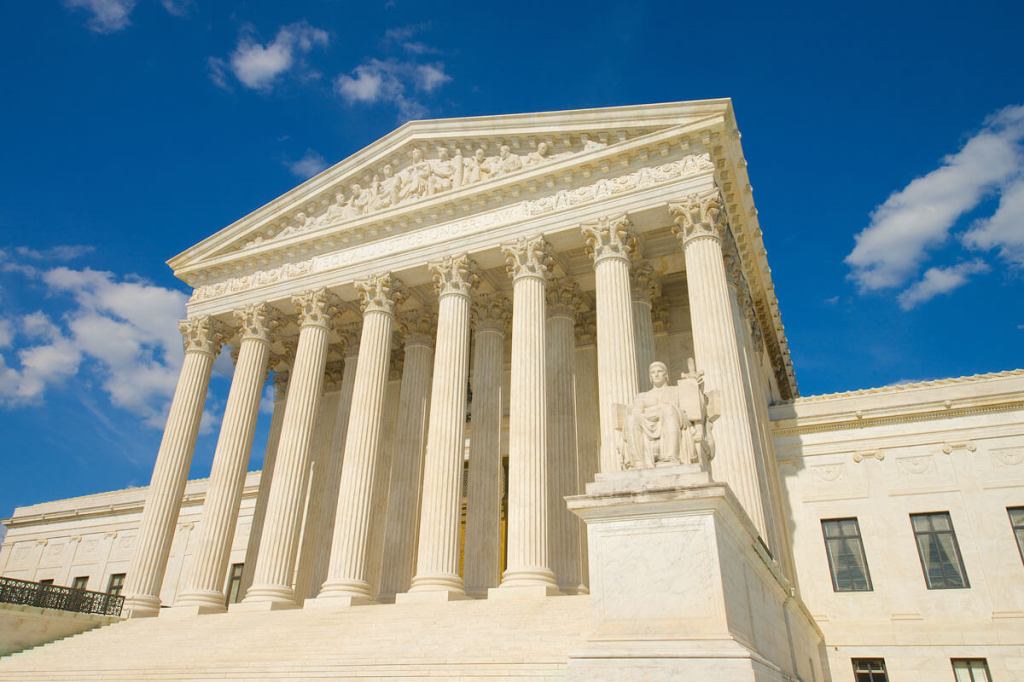
  • Take Citizenship by Force? Here’s How Past Supreme Court Giants Would Shut It Down

    Intro: The Fight Over Citizenship Isn’t New—But This Time Feels Different

    We’ve heard a lot of wild promises during election season. Still, this one stands out: President Trump has floated the idea that he wants to explore if he could revoke the citizenship of people who were naturalized—take it away. No court ruling. No due process. Just the stroke of a pen. His supporters have been slowly getting behind the idea.

     It’s not the first time someone in power has tried to play fast and loose with the idea of who “deserves” to be an American. But hearing it now, after everything we’ve seen in recent years, it feels like we’ve entered dangerous territory. You must wonder what the reasons are. Loyalty? Patriotism, or just racism with more steps?

     So, let’s take a step back and imagine something different: What would some of the most respected Supreme Court justices—conservative and liberal alike—say about this? How would they respond to a president trying to strip people of their citizenship unilaterally?

    Section 1: Even Conservative Justices Knew Authoritarianism When They Saw It

    It’s easy to assume that conservative justices would automatically back someone like Trump. But many of them, especially from earlier eras, understood that being “tough” on immigration or crime didn’t mean handing unchecked power to the president.

    Take Chief Justice William Rehnquist, for example. No one would ever accuse him of being soft on anything. But even he respected the limits of executive power. He believed in the strength of the Constitution, not just the whims of whoever held office.

    Justice Antonin Scalia is another name worth remembering. He was famously conservative and sincerely believed in the power of the presidency—but not when that power ignored the law. Scalia believed in structure, process, and original intent. The idea of a president casually revoking someone’s citizenship would have offended the very legal order he spent his life defending.

    Even Justice Sandra Day O’Connor, the first woman on the Court and a true believer in balance and moderation, wouldn’t have stood for this overreach. She once said the Constitution “does not tolerate the abuse of power by government officials.” It’s hard to imagine she’d find anything constitutional in a president revoking someone’s citizenship because they were born elsewhere.

    Section 2: The Liberal Justices Would Have Seen the Red Flags a Mile Away

     For the Court’s more liberal justices, this would be a constitutional and moral crisis.

     Justice Thurgood Marshall, who argued Brown v. Board of Education before joining the Court, spent his life fighting for civil rights. He deeply understood what citizenship meant—especially for people who had to fight to be seen as fully American. To him, citizenship was more than paperwork. It was a promise. In his view, taking that away on a political whim would betray everything the Constitution stands for.

     Justice John Paul Stevens, known for his thoughtfulness and independence, might have written one of those carefully worded but devastating dissents, reminding us that “national security” or “law and order” don’t justify ignoring people’s fundamental rights.

     Justice David Souter, often quiet and reserved, would’ve seen right through the smokescreen. He believed deeply in protecting individual liberty from government overreach. He’d probably remind us that when someone in power starts talking about who’s “real” and who’s “not,” we’re heading into very dark waters.

     These justices didn’t always agree with each other. But when it came to protecting the rights of individuals, especially the most vulnerable, they showed up. They asked tough questions. They didn’t back down.

    Section 3: What Would the Current Court Do? It’s Not So Clear-Cut

    So, what about the justices sitting on the Court right now?

     It’s tempting to assume they’d go along with Trump. After all, it’s a 6–3 conservative majority. But the reality might be more complicated.

     Justices Clarence Thomas and Samuel Alito have long histories of siding with strong executive power, especially when national security or immigration is involved. They might support a president’s efforts to tighten naturalization rules—but even they might hesitate at outright stripping someone of their citizenship without due process. That’s a line the Court has generally been careful not to cross.

     Chief Justice John Roberts is a bit of a wild card. He’s profoundly conservative but also greatly cares about the Court’s reputation. He doesn’t want it seen as just another political arm of the presidency. In the past, like in the 2019 census case, he’s shown he’s willing to push back when a president goes too far.

     Justice Neil Gorsuch has occasionally sided with liberal justices on matters of individual rights. He tends to have a libertarian streak, which means he might not be okay with the government having unchecked power to revoke something as essential as citizenship.

     Justices Brett Kavanaugh and Amy Coney Barrett align more closely with traditional conservative legal thinking. They believe in interpreting the law as written—but that could work both ways. If the Constitution doesn’t give the president the power to revoke citizenship, they might not back him either.

     Ultimately, a policy like Trump’s would probably split the Court. Some justices might go along with it. But others—Roberts, maybe Gorsuch—might surprise us and say, “No, this isn’t what the Constitution allows.”

    Conclusion: We’ve Seen This Movie Before—and the Court Usually Knows How It Ends

      This isn’t the first time fear and power have threatened the promise of American citizenship.

     During World War II, we locked up Japanese Americans because we let fear win. During McCarthyism, we ruined lives over accusations with no proof. And every time, the Supreme Court has had a chance to stand up or stay silent.

     The best justices—on both sides of the political spectrum—have always understood that citizenship isn’t a tool for control. It’s a status rooted in law, earned through commitment, and protected by the Constitution.

     If Trump tries to go down this road again, it’s not just a legal question. It’s a moral one. And the Court—if it remembers its best self—will know what to do.

  • Montezuma Castle Park

    Took a trip up there recently and was blown away by the designs of this place.

     Built around 1100-1400 AD by the Sinagua people. This five-story and 20-room castle built in a cave was used for shelter. Ironically, the place’s name isn’t even related to the people who lived in it. The name was given back in 1867 by the early settlers who believed it was Aztecs.

     The castle is about 90 feet high and was built inside a cave in the Camp Verde area of Arizona.  Access through the castle was through ladders that were probably raised or lowered through trap doors in the ceiling to prevent enemy advances or access. One of the main reasons the Sinagua chose to build the Castle so far above the ground was to escape the threat of natural disaster in the form of the annual flooding of Beaver Creek. At the time, water was pretty frequent in those areas, and during the Monsoon season, the creeks would build up and flood the nearby areas.

      The dwellings and the surrounding area were declared a U.S. National Monument on December 8, 1906, due to the American Antiquities Act signed [1] earlier that year. It is one of the four original sites designated as National Monuments by President Theodore Roosevelt. Montezuma Castle was added to the National Register of Historic Places on October 15, 1966

    Links are posted below for anyone who would like to read more.

    https://en.wikipedia.org/wiki/Montezuma_Castle_National_Monument

    https://www.nps.gov/moca/index.htm

  • How Tariffs Saved Harley-Davidson in the 1980s

    With the headaches of President Trump’s tariffs being passed, I decided to go dumpster-diving to see how history has treated tariffs. We are familiar with the McKinley Tariff Act of 1890 and the Hawley-Smoot Tariff Act of 1930. However, I have found some interesting tariffs that have been implemented in the past. This one stood out to me particularly. I had no idea that Harley-Davidson needed to be saved in the 1980s from competition in Japan. Let’s get started. Enjoy reading.

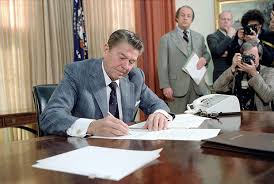
     The 1983 motorcycle tariff, or Memorandum on Heavyweight Motorcycle Imports, was a presidential memorandum ordering a 45% tariff on heavyweight motorcycles imported to the United States, signed by President Ronald Reagan on April 1, 1983, on the US International Trade Commission’s (USITC) recommendation to approve Harley-Davidson’s petition for import relief. The tariff expired in 1988

     Harley-Davidson was the sole surviving American motorcycle manufacturer. All of the company’s models in production were heavyweight motorcycles. Before the imposition of the tariff, Harley-Davidson faced a sharp decline in sales, primarily due to competition from Japanese motorcycle companies. Less than a decade prior, Harley-Davidson had a 100% market share of motorcycles with an engine size of 1000cc or more prominent within the US. Its market share fell to less than 15% a decade later. Honda, Yamaha, Suzuki, and Kawasaki undercut Harley-Davidson by $1,500 to $2,000 per vehicle. In 1980, Harley-Davidson generated $289 million in sales, but by 1982, sales had declined to around $200 million. Employees also saw a harsh decline in wages and hours worked. The unsold inventory of bikes doubled during the period, again due to the undercutting of Japanese counterparts.

    In the early 1980s, Harley-Davidson petitioned the USITC, claiming that Japanese manufacturers were importing motorcycles into the US in such large quantities as to harm or threaten to harm domestic producers. The USITC agreed (by a 2–1 vote) that Harley-Davidson was entitled to relief and recommended the tariff structure that the Reagan Administration later implemented. Unlike the USITC’s recommendation, Reagan also implemented tariffs on European manufacturers. The tariff applied to all imported motorcycles with engine displacements exceeding 700 cc. Reagan signed a memorandum ordering the tariff on April 1, 1983, and signed Presidential Proclamation 5050 on April 15, enacting it into law as 97 Stat. 1574 to the United States Code

     During the first year of the tariff, the rate was set at 45%, then dropped to 35% in the second year. In the third year, the tariff was reduced to 20%, 15% in the fourth year, and 10% in the fifth year. The total tariffs on foreign motorcycles were 49.4%, 39.4%, 24.4%, 19.4%, and 14.4% each year. To avoid harming small-scale manufacturers, tariff-rate quotas were implemented. These quotas exempted manufacturers from the additional tariffs implemented by the bill. Still, they required them to pay the 4.5% rate on all motorcycles as part of a tariff that remains in effect today. Five thousand units (increasing yearly to 6,000, 7,000, 8,500, and 10,000) of motorcycles were tariff-exempt for motorcycles manufactured in the Federal Republic of Germany. This tariff applied almost exclusively to BMW motorbikes. Six thousand units (increasing by 1,000 yearly) were exempt for motorcycles imported from Japan. Four thousand units (increasing yearly by 1,000) were tariff-exempt for all other countries. This tariff did not apply to any bikes manufactured within the country, which exempted the 90,000 Honda and Kawasaki bikes manufactured in the US.

    Harley-Davidson subsequently rejected offers of assistance from Japanese motorcycle makers. The legislation was also met with significant resistance from Japanese authorities, who threatened to file unfair trade charges against the United States in Geneva. Motorcycle prices were not projected to rise until the backlog of motorcycles had been sold. They were then projected to increase by 10%.

    Harley-Davidson did offer to drop the request for the tariff in exchange for loan guarantees from the Japanese.

     In March 1987, Harley-Davidson took an unprecedented action and requested the removal of the tariff. “We no longer need tariff relief to compete,” said Vaughn L. Beals Jr., Harley-Davidson’s chairman and CEO. Ronald Reagan removed the tariff on October 9, 1987, claiming that the action would not harm the domestic industry.

    References

    About: 1983 motorcycle tariff. https://dbpedia.org/page/1983_motorcycle_tariff

    Memorandum on Heavyweight Motorcycle Imports | The American Presidency Project. https://www.presidency.ucsb.edu/documents/memorandum-heavyweight-motorcycle-imports

    https://www.revzilla.com/common-tread/motorcycle-tariffs-and-harley-davidson

    https://web.archive.org/web/20080308143411/http://www.japanlaw.info/lawletter/july83/ase.htm

    https://www.reaganlibrary.gov/archives/speech/memorandum-heavyweight-motorcycle-imports

  • Apple’s Effort to address “Privacy”

    Apple’s Privacy on iPhone << Click on the link to watch the video on YouTube

      With advances in today’s digital world, privacy is becoming one of the most pressing issues for users. New smartphones are emerging that track users’ every move, from their location to online activities. Millions of iPhone users are starting to question how much of their data is secure and if any measures are being taken to protect it. Recently, Apple released an ad titled “Privacy on iPhone,” which employed satire and visual exaggerations to illustrate the potential dangers of being digitally tracked. The ad follows a man who is being followed around by random people representing various apps and companies that are collecting his data until he blocks them all by adjusting one setting on his iPhone’s privacy settings and using a metaphor: emotional appeal and real-world scenarios. Apple promotes the iPhone as a tool that empowers users to take control of their data and determine who has access to it.

     Watching the Apple ad “Privacy on iPhone,” we meet a guy named Felix who is just making a routine stop for coffee. The transaction takes a weird turn when the barista employee begins to follow Felix and starts sharing his personal information out loud, offering details that would be concerning to anyone, generating a sense of discomfort that gradually builds as the ad progresses. Apple uses the ad to appeal to the audience’s emotions by making them feel uncomfortable and perhaps even worried about how anyone can gain access to their private information. The situation begins as humorous at first, accurately demonstrating how apps and websites can collect and share your data without your knowledge. Apple also leverages ethos by presenting itself as a brand already known for innovation, trust, and security for its users. Since most viewers already know Apple as a tech leader, they will very likely be able to trust Apple’s message and the solutions it offers at the end.

     As Felix leaves the coffee shop and goes about his day, the number of people following him will gradually increase with each interaction. Each new person he encounters adds more personal information about him, revealing sensitive details such as his location, recent purchases, and even his personal medical history. The swarm of strangers appearing quickly becomes too overwhelming. It symbolizes just how users are constantly being tracked online by the algorithms of advertisers, apps, and websites. Apple uses this visual metaphor to make the concepts of digital surveillance feel real and almost inescapable. Instead of explaining data collection through technical language, the ad brings this to life through imagery that will be hard for the audience to ignore. The metaphor taps into the growing discomfort many people now have about being watched and analyzed by their iPhones. The constant presence of these people invading Felix’s space highlights how privacy is gradually stripped away in subtle yet unnoticed ways. Apple’s message is clear: You do not know who is watching, but it’s happening, and we want you to take control. By the time Felix reaches his breaking point, viewers fully understand that this is more than a commercial; it’s a warning to anyone who utilizes the iPhone. Apple isn’t just selling a phone. It’s promoting a sense of empowerment and protection. The ad encourages viewers to value and protect their personal information by utilizing the tools installed directly on their iPhones.

     The ad starts in a light and comedic tone, complete with curious strangers casually reading his personal information aloud. The mood quickly transitions as the situation escalates. At first, the ad’s humor makes the situation feel light and accessible, but it also serves as a form of satire. Apple employs exaggeration and absurdity to satirize the extent to which your iPhone is digitally tracked, portraying it as a laughable everyday event. This satirical tone draws viewers in with humor while exposing the unfortunate truth behind today’s data collection. As the crowd following Felix grows and his invasions become more frequent and aggressive, the ad begins to take a darker turn. Felix becomes more frustrated with the invasions, and the experience shifts from funny to fearful and chaotic. The tonal shift mirrors how many people would joke about targeted ads and tracking, only for themselves to find it intrusive and exhausting later. The ad’s ending occurs when Felix pulls out his iPhone and turns off the app tracking, instantly stopping the chaos around him. The final moment demonstrates that digital surveillance has become normalized, but Apple offers its users a way out of it. By presenting its message through satire and then shifting to a serious tone, Apple presents itself as a compelling case for privacy, positioning itself as the solution for those seeking greater control over their data and who can have access to it.

     Apple’s “Privacy on iPhone” ad taps into the public’s growing concerns over digital privacy and the dangers of unregulated oversight. Over the last decade, companies such as Facebook, Google, and TikTok have faced similar controversies for collecting, storing, and selling user data without their users fully understanding what they’ve agreed to. This ad reflects those real-world fears by turning invisible tracking into something viewers can see and feel. The message is essential in an era when people are growing very worried about how their data is being stored and used. Apple is positioning itself as a privacy-first company and uses this ad to set itself apart from its competitors. Besides just selling a phone, Apple is trusting its users and providing them with more control in a world that is increasingly feeling out of their hands. The ad is a direct response to the public’s questions for transparency and consumer protection. It is also designed to reassure users that Apple will be protecting their data in the battle for privacy.

     The ad conveys a persuasive and essential message about digital privacy. Using satire, a metaphor, and emotional appeal can encourage the audience to reflect on the fact that their data can be easily accessed without their knowledge. The ad works in striking a perfect balance between humor and discomfort, making the audience laugh at first and then consider the message’s seriousness later. By witnessing data collection firsthand, the ad brings awareness to this problem without overwhelming or confusing them. One of the best elements is the moment when Felix reclaims control by changing a simple setting on his iPhone. This moment demonstrates that the solution is not only possible but also easily accessible, thereby strengthening Apple’s credibility. The ad’s success lies in its skill to articulate complex issues clearly and memorably. The audience will be left feeling more aware of the threats to their privacy but will feel more confident in Apple’s commitment to protecting their data. In this respect, the commercial achieves its rhetorical purpose and helps strengthen the brand’s reputation.

     Apple’s ad presents a rhetorical message by turning the threat of digital surveillance into a real-world learning experience. By employing satire, emotional appeal, and a relatable narrative, the ad presents a compelling case for why users should care about how their data is being used and whom they can trust to protect it. The ad avoids relying on standard fear-mongering or dry, boring tech jargon. Instead, it utilizes storytelling and applies colorful metaphors to make privacy relatable and personal. The company’s reputation as a privacy-focused organization is reinforced through the solutions it has provided, as shown at the end of the ad, where Felix can now stop the chaos with a simple tap on his iPhone. The final act leaves the audience with a sense of control and a feeling of relief. In today’s world, where privacy can often be challenging to achieve, Apple is positioning itself as a brand that not only presents products but also provides a genuine sense of empowerment and protection to its users. This ad achieves this by combining strategy and creativity, utilizing cultural awareness to convey a message that is both meaningful and genuine.

  • Pete Rose Deserved His Ban — But MLB’s Integrity Argument Is Hollow

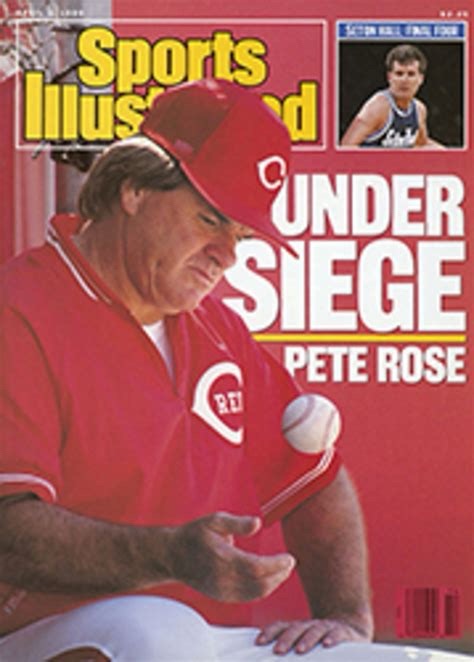
    Sports illustrated 1989

    When Major League Baseball announced in 2025 that Pete Rose’s lifetime ban would be lifted posthumously — quietly, with little fanfare — it was a symbolic move that raised more questions than it answered. It was pitched as procedural: all lifetime bans now expire upon death. But to many of us watching, it felt more like a final insult than a gesture of reconciliation.

    And to be clear: Pete Rose deserved the ban.

    This isn’t about excusing him. The man bet on baseball — the one thing the sport has long considered unforgivable. Not just as a retired player or casual fan, but while managing the Cincinnati Reds. That alone justified harsh consequences. Then he denied it for 15 years, only confessing in 2004 — and only, it seemed, when he thought it might help him claw his way into the Hall of Fame.

    But it doesn’t stop there. Rose served five months in prison in 1990 for tax evasion. And far worse, he admitted in sworn testimony to having a sexual relationship with a 14-year-old girl when he was in his 30s, claiming he thought she was older. His off-field behavior has been self-destructive, crude, and often morally indefensible.

    Yet with all of this said — Major League Baseball has absolutely no right to stand on a soapbox about “integrity.”

    This is the same league that:

    Looked the other way during the steroid era because home runs brought fans and profits, only cracking down when public pressure and Congress got involved. Let the Houston Astros keep their 2017 World Series title, despite running a coordinated, high-tech sign-stealing scheme that undermined the sport’s fairness. Welcomes back players with domestic violence suspensions as long as they can still contribute to a team’s win column. Openly partners with gambling companies, promoting betting apps on broadcasts — turning what was once a sacred line into just another revenue stream.

    So when MLB reinstates Pete Rose only after his death, it’s not some act of closure. It’s a coward’s move — a calculated way to signal virtue without having to deal with the actual man. Rose can’t give interviews, attend induction ceremonies, or challenge the league’s narrative. It’s a hollow gesture, meant to tidy up baseball’s image without risking backlash.

    Let’s be honest: Pete Rose was no victim. He made his bed — and kept making it worse. But if we’re going to talk about integrity, it has to be applied consistently. Otherwise, it’s just performance.

    MLB isn’t upholding sacred tradition. It’s protecting its brand. And sometimes, that’s a lot harder to forgive.

  • The Decline of Food Safety Regulations in America

    Every day, millions of Americans consume food. They enjoy the flavors and appearance, and can it be affordable?  However, Americans are completely oblivious about how food is grown, produced, what additives are added, and how it is packaged. Thankfully, the United States government has programs that enforce regulations to ensure food production, food safety, and security. At the beginning of the 20th century, the United States passed the “Pure Food and Drug Act”. This led to the creation of the FDA (Food and Drug Administration) and later the USDA (Department of Agriculture). These organizations were put into place to provide federal oversight over the issues I listed above, but what if I told you that these fail-safes are failing? Regulations are obsolete, and the food industry is shifting profits over the consumer’s health. With this said, things can and are being done. Individually and politically, Americans need to resolve this issue and ensure we have affordable and healthy food for American consumers. We need to modernize our food industry, more oversight is needed to ensure safety, and most importantly. Food producers need to provide more transparency in what goes on behind the scenes. Such as, what additives, and other chemicals are used in the production.

    Today, food products are promoting food labels offering contradicting, vague, or downright disingenuous labels. This issue has caused Americans to make misinformed decisions on what foods are safe and healthy to eat. In 1994, DSHEA (Dietary Supplement Health and Education Act) was passed, reducing the FDA’s authority. This explained that it exempted dietary supplements from meeting specific regulations.  This was one of the many steps in how food regulators began to show signs of faltering. Before this happened, the federal government was much more attentive to false labels. One example was in 1931 when the Federal government seized cases of a product called “Bred Spred”. The product was a strawberry jam that federal prosecutors claimed was an imitation food product and could be misleading its customers. Prosecutors felt that if consumers knew this, then the product wouldn’t be purchased. The case was tied up in court because of the confusion over “Jam”, but it forced the government to pass more laws that were detailed and tailored to the food market of the time. However, failures would still occur, and more questions would have to be asked. In Virginia, an Ice cream factory would have to shut down due to Listeria contamination in the water system. The water backflow could cause a serious risk to the facilities’ water supply system. This would trigger a nationwide recall of Ice Cream bars. In 2009, both the FDA and USDA were forced to address Listeria issues again. Sadly, this evaluation would show a failure of both organizations. Listeria infections can have negative effects on the elderly, pregnant women, infants, and people with weakened immune systems. Despite the potential risks, the FDA chose to water down its “Zero Tolerance policy” towards listeria inspections. The revised policy allowed the presence of listeria in “ready-to-eat” food. This would draw major criticism from food, medical, and consumer agencies. These cases and results show that there has been a gradual breakdown from being very textual, to reducing the rules for more leeway, and increasing the risks of potential foodborne illnesses. These examples show that a greater need for more oversight is necessary. There must be more scrutiny towards corporations putting profit over public safety. The examples presented highlight a trend in how government oversight has been weakened, and bad practices have been emerging.

    While there have been lax standards for potential foodborne illnesses, harmful additives are still being used, and questions are beginning to be asked why this hasn’t been addressed. Red Dye 40 has been in the news lately for misguided reasons. While some politicians are just using this to raise awareness for potential personal benefit, this one item is an example of an unhealthy additive that is used heavily and can cause serious medical complications. Dr. Lili Chen recently published a study about Red Dye 40, and the results were quite concerning. In her study, red dye was shown that it can potentially cause massive intestinal inflammation and severe cases of Colitis. The study also concluded that long-term ingesting causes future cases of colon cancer. Her study reached one basic conclusion. It is hazardous and it needs to be removed. Examples like this are why there are growing concerns that the FDA is falling behind the advancements of science and understanding of what is healthy, and what isn’t. Despite the findings, it’s clear that the FDA’s failure to adapt and improve is hindering the efforts to protect consumers from unhealthy risks. Government processes are being slowed, and regulations aren’t being enforced. The agency has been sluggish since Congress handed over all authority to them for decision-making in 1958.This is a clear breakdown and shows the Government’s “right hand doesn’t know what its left hand” is doing. The FDA is only inspecting about 2% of food imports. That means that 98% of food is off the radar. The Center Public Integrity in conjunction with the Walter Cronkite School of Journalism at Arizona State, the colleges of Harvard, Maryland, and Missouri spent 10 weeks researching this process. What they discovered was 48 million Americans get sick from bad food. 135,000 are hospitalized, and 3000 die annually. 80% of seafood entering the market isn’t vetted properly by inspectors. They concluded that the FDA had failed to follow up and close out newsletters about potential issues and were not closing outbreak cases correctly. This is an apparent systemic failure by the Federal government to protect American consumers from the possible dangers of unchecked food.

    While there have been acts and provisions passed to help regulate the market. There is a clear sign that the current enforcement of regulations is beginning to fail and that actions are needed. This isn’t the first time we have been on this road. In the early 1900s, Upton Sinclair wrote a book called “The Jungle”.  The book gave readers an inside look at the meat-packing industry and its treatment of the immigrants in horrible work conditions. He was hoping that his book would have an impact, but the size of the public’s reaction stunned the author. Sinclair was quoted as saying, “I aimed at the public’s heart, and by accident I hit it in the stomach.” The reaction was swift and caused Congress to pass the Food and Drug Act and the Inspection Act of 1906. It was the first time that the food industry would have regulations and oversight. As the industry changed and advancements were made, the federal government would apply new laws to keep up with the changes and ensure the public is protected. In 1938, Congress again made changes. They passed the Federal Food, Drug, and Cosmetic Act (FDCA). The Act gave the FDA the ability to oversee and regulate the production, sale, and distribution of food, drugs, medical devices, and cosmetics. This was triggered due to random cases of poisoning. Elixir sulfanilamide, an untested antibiotic containing the toxin diethylene glycol, led to over 100 deaths across 15 states. In the years since, regulations have become relaxed, and protecting the consumers has taken a backseat to making things easier for the corporations. An example of this process was the 2020 SECURE Rule. This would reduce federal oversight, particularly over genetically engineered crops. Instead of stronger safety rules, several of the genetically grown crops weren’t required to be evaluated by regulators. In her analysis, Margaret Grossman explained that the rule, “Reduced the regulatory burden on the biotechnology developers” by exempting “many of the genetically engineered crops” from complete oversight. Despite early efforts to enforce the regulations, and ensure accountability was being practiced. Complacency again would become the issue in the FDA’s inability to prevent preventable dangers to its consumers.

    Annually, 3 million Americans get sick from various forms of harmful bacteria in the meat and poultry. Feces were likely contaminated as they can carry Salmonella, and E. Coli during the slaughter process. Failures are continuing to plague the food monitoring system, which can often lead to outbreaks that won’t be detected quickly. This can result in contaminated foods making their way into the stores, and eventually into someone’s home before anyone can realize what is happening. 47 million Americans are impacted by food insecurity, and the lack of access to nutritious meals. The issues of impacting food are a result of systemic failures and proactive measures. The lack of secure food can cause serious consequences on Americans’ health and well-being. This issue can also have massive impacts on a person. They can lead to depression, anxiety, stress, and could impact academic and work performance. Personal responsibility does help, but in today’s market. The issues of financial security, affordability, and accessible food are still complicated. The federal government must play an important role in assisting its citizens in achieving this goal.

    The United States created a safety net system to ensure the public was protected. Sadly, it has failed to keep up with the changes of the times. Over the years, there have been reforms to prevent some major health crises. With that said, the demands of the industrial market have raised calls for stronger regulations and offer more transparency in its food safety practices. Without these updates and reinforcements of regulations, millions of consumers could be at greater risk of illness or death. The government must take the lead on this. They have the ability but seem to lack the drive to want to take care of the citizens. Eventually, consumers must take precedence and not be secondary to corporate profits.

    Works Cited

    Center for Public Integrity. *Federal Agencies Falling Short in Protecting U.S. Food Supply*. Public Integrity, 2024, https://publicintegrity.org/health/federal-agencies-falling-short-in-protecting-u-s-food-supply.

    Chen, Li, et al. “IFN-γ+ Cytotoxic CD4+ T Lymphocytes Are Involved in the Pathogenesis of Colitis Induced by IL-23 and the Food Colorant Red 40.” *Cellular & Molecular Immunology*, vol. 19, 2022, pp. 777–790. https://doi.org/10.1038/s41423-022-00964-3.

    Curtis, Patricia A. *Guide to US Food Laws and Regulations*. 2nd ed., Wiley-Blackwell, 2013.

    Feeding America. “Hunger in America.” *Feeding America*, 2024, https://www.feedingamerica.org/hunger-in-america.

    Grossman, Margaret Rosso. “The SECURE Rule: New Regulations for Crop Biotechnology in the United States.” *European Food and Feed Law Review*, vol. 15, no. 6, 2020, pp. 548–562.

    National Center for Biotechnology Information (NCBI). *Food, Drug, and Cosmetic Act (FDCA)*. *StatPearls*, National Library of Medicine, 2023, https://www.ncbi.nlm.nih.gov/books/NBK209119.

    O’Reilly, James T. *A Consumer’s Guide to Food Regulation and Safety*. Oceana, 2010.

    Sinclair, Upton. *The Jungle*. G&D Media, 2020.

    U.S. Food and Drug Administration (FDA). “Federal Food, Drug, and Cosmetic Act (FD&C Act).” *U.S. Food and Drug Administration*, 2024, https://www.fda.gov/regulatory-information/laws-enforced-fda/federal-food-drug-and-cosmetic-act-fdc-act.