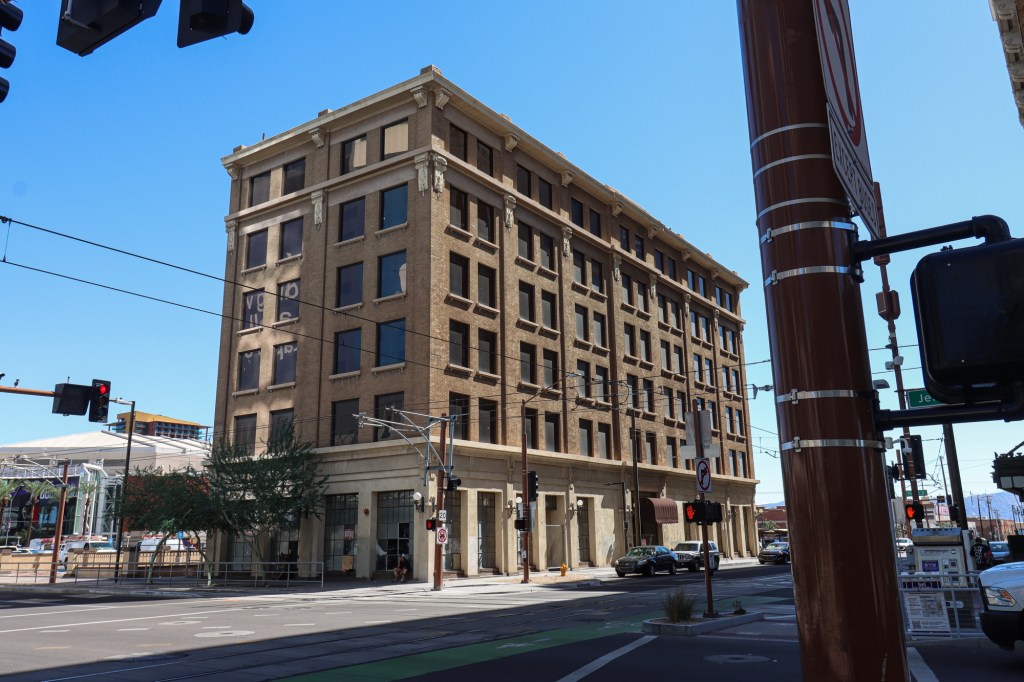
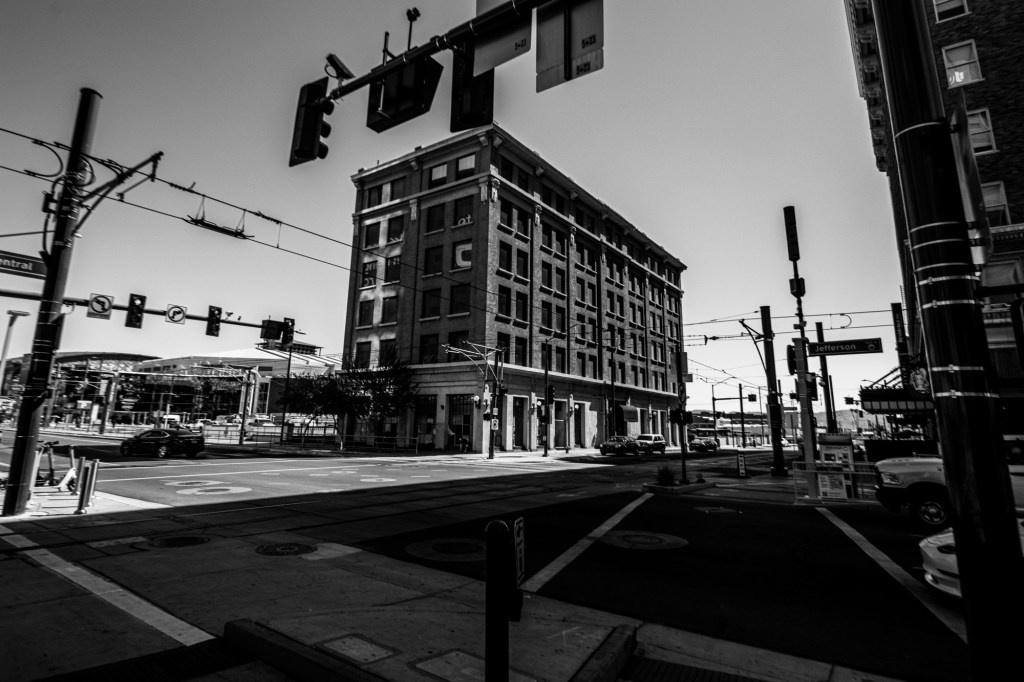
The Barrister building has a wide and dubious history, I was in the city doing shots of som of the buildings of significance. This on I had no idea until looked it up.
1913-1915
In 1913, Salem Ackerman, a successful Syrian immigrant, decided to relocate his dry goods store and purchase a lot at Central Avenue and Jefferson Street.
Initially planning for the 3-story fireproof store, Ackel revised the plans to the 6-story hotel and hired architect Frederick C. Hurst, who specialized in reinforced concrete work.
Construction spanned 21 months, resulting in the 1915 opening of the 6 story Jefferson Hotel, the tallest building Arizona at the time.
1915: Grand Opening and Features
As mentioned, the Jefferson Hotel would open in 1915. It would boast 150 rooms, marble and tile finishes, a main entrance designed as a luxury space, and an acclaimed rooftop garden which quickly gained popularity. Room prices ranged from $1-$3 per night.
The Arizona Republic featured a special 6-page issue celebrating its opening as an epoch-making for the Southwest hotel industry.
1919: Rumored Expansion
By 1919, the hotel’s success sparked rumors of a potential annex, though no expansion was ultimately made.
1960: Cultural Fame- Guest appearance in the “Psycho”
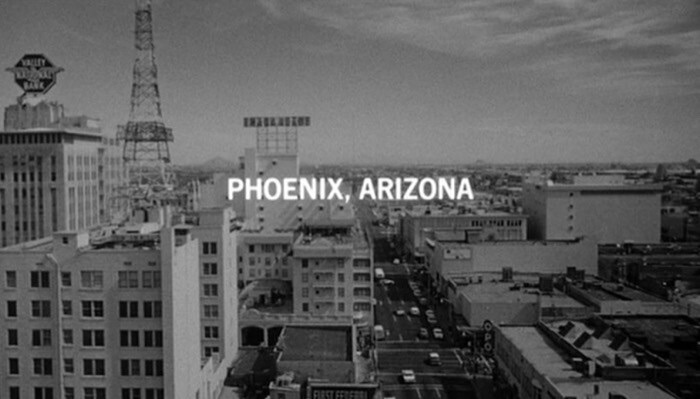
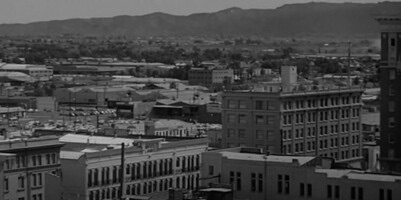
The Jefferson Hotel gained notoriety with its brief appearance in the opening sequence of Alfred Hitchcock’s 1960 film “Psycho,” depicting downtown Phoenix’s skyline.
1975: Decline and Auction
The hotel closed in 1975 following the decline of downtown Phoenix as a commercial hub. Its furnishings were auctioned off after closure.
1979: Barrister Place Era
Purchased and gutted by the new owners in 1979, it was renamed Barrister Place in a bid to attract legal firms, building remained largely vacant.
1989-2012: City Ownership and Reuse
In 1989, it was leased and later purchased by the City of Phoenix. Phoenix’s Police would open their museum on the ground floor in 1995. City offices occupied the building until 2010. The museum was removed in 2012.
2015-2018 Sale Redevelopment
In 2015, the city sold the building to the private developers for mixed-use redevelopment, which initially stalled. High-end condominiums, shops, and restaurants were developed, with efforts to preserve the original facade in 2015.
2018-Present Ongoing Restoration and Legacy
Today, it is now known as Jefferson Place or Barrister Building, it remains a downtown landmark, with luxury residences ad preserved historic character. The redevelopment reflects adaptive reuse trends in downtown Phoenix while maintaining the original building’s legacy and appearance.



 Throughtful Reader
Leave a comment