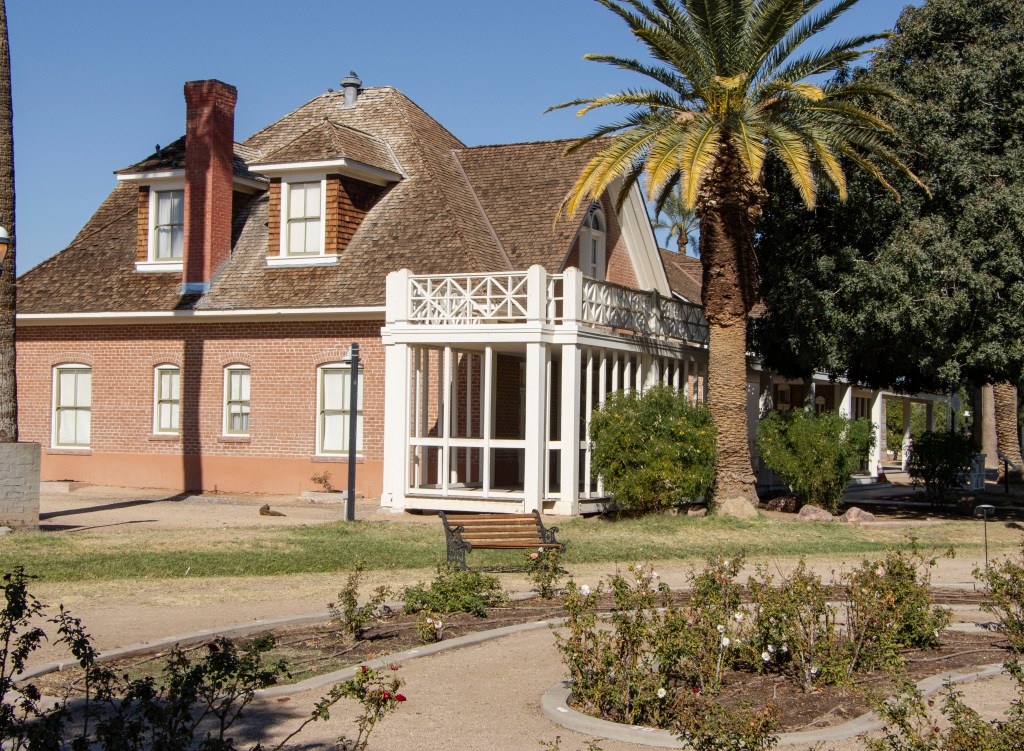
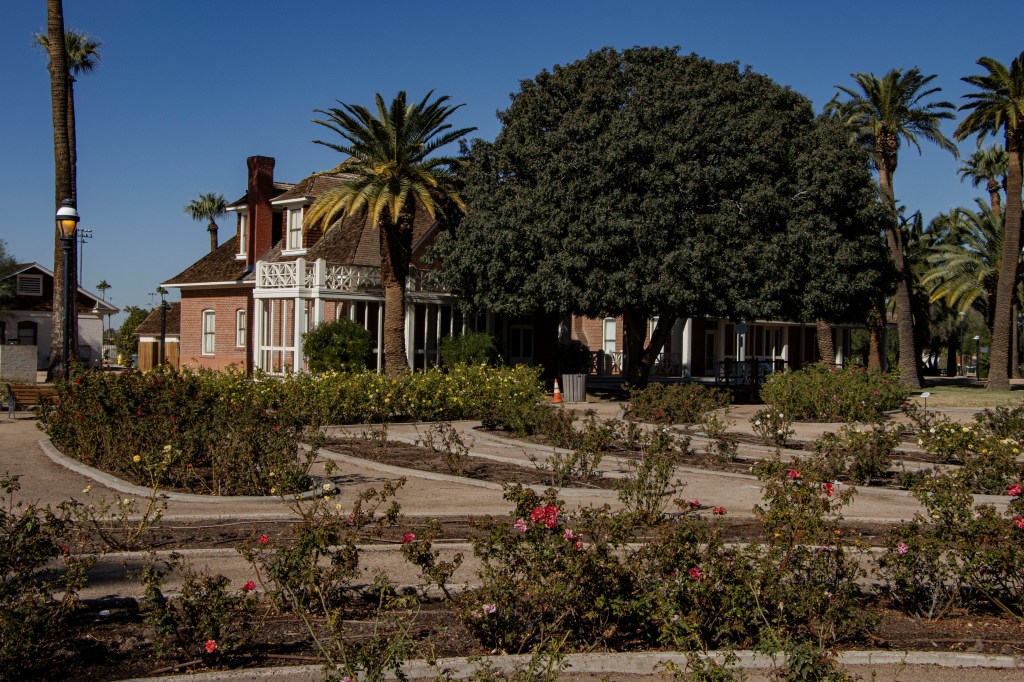
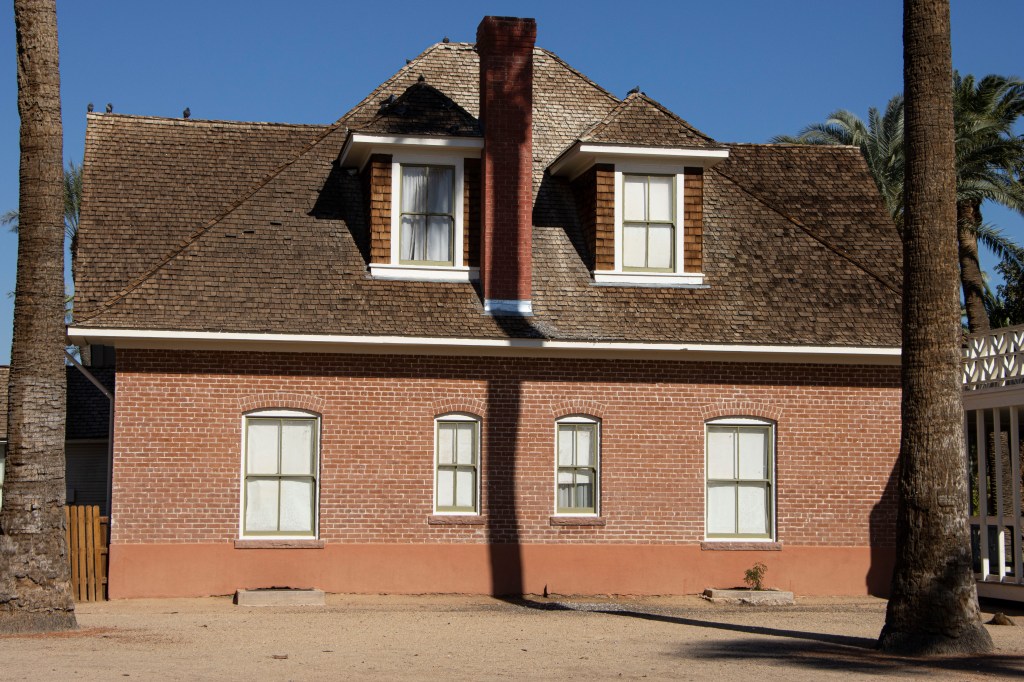
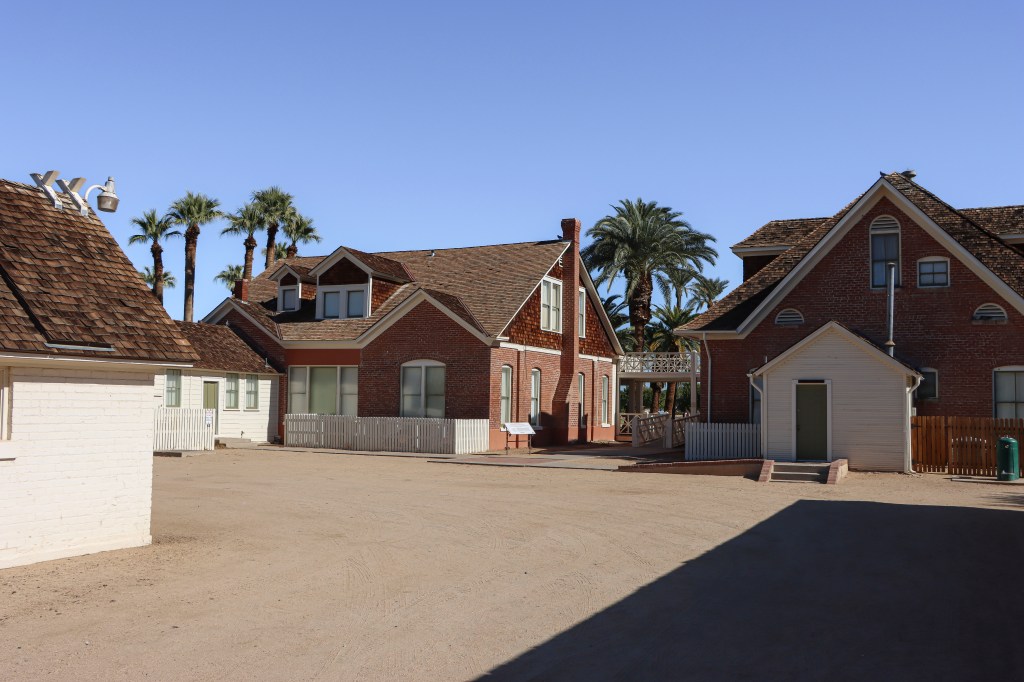
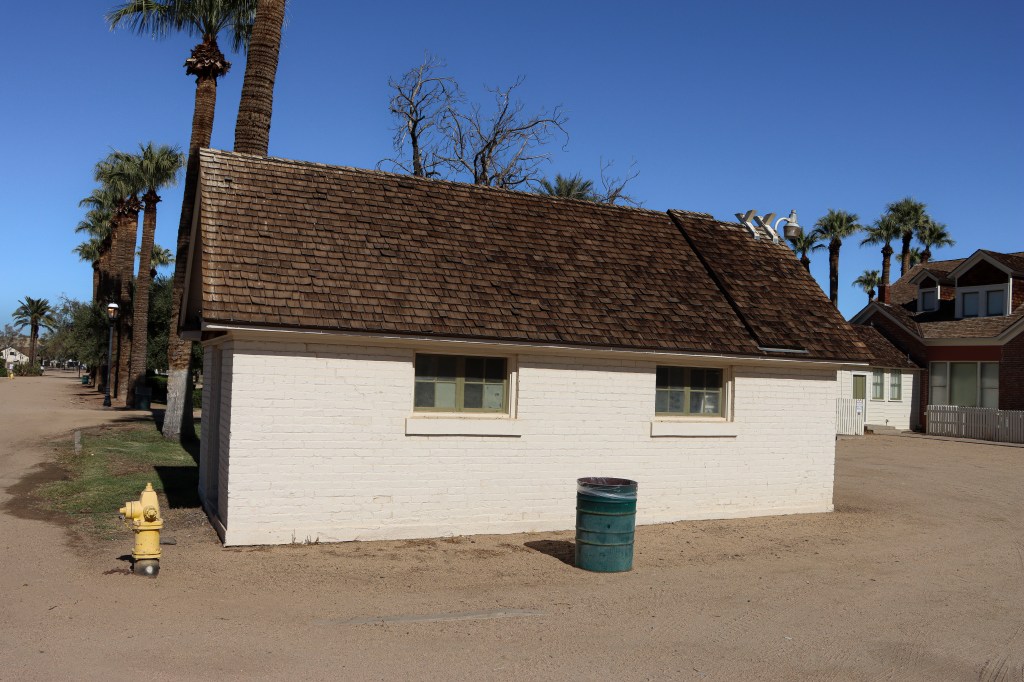
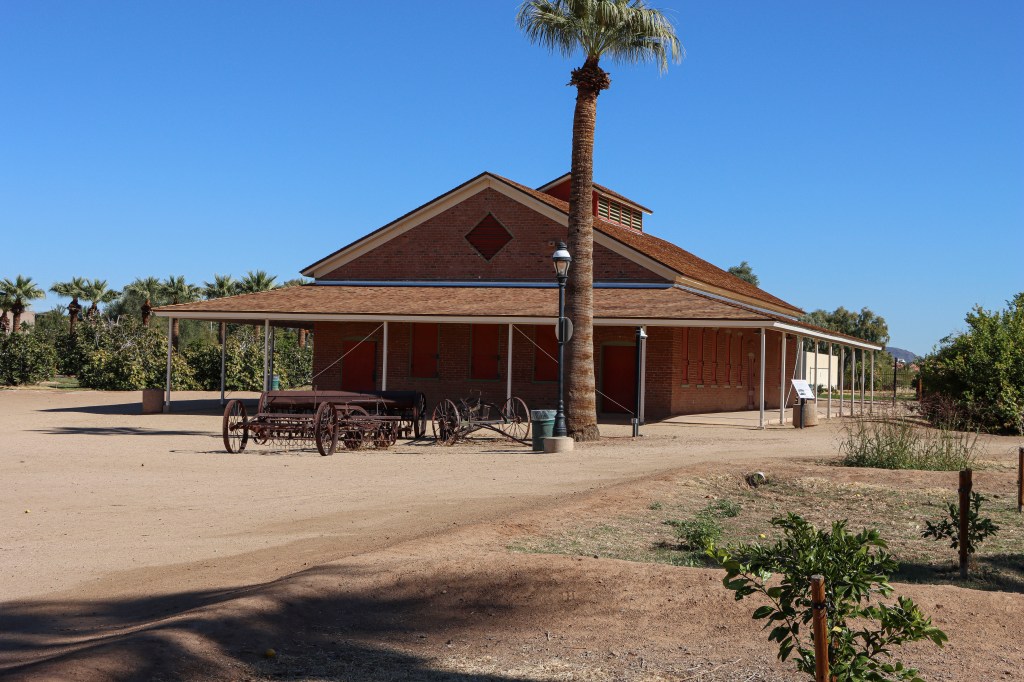
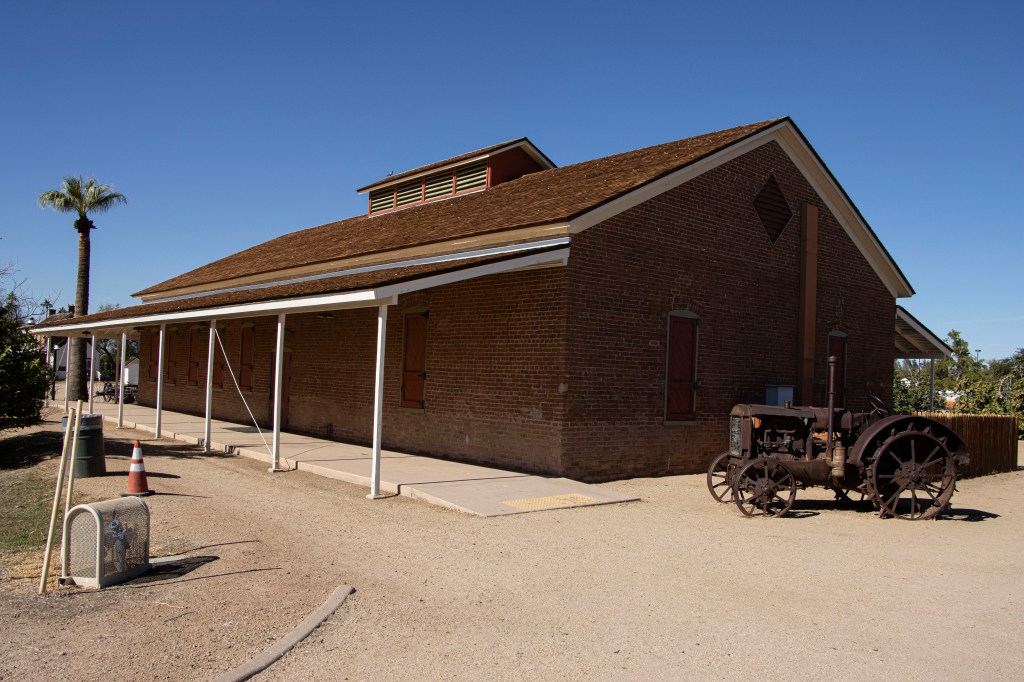
The Sahuaro Ranch was founded in 1886 by William Henry Bartlett, a native of Illinois. The ranch, situated north of what would eventually become the city of Glendale, Arizona, was rich in figs, other fruit orchards, vineyards, and fields of alfalfa. The ranch has all its historical structures restored, and the Glendale Parks and Recreation Department administers the Sahuaro Ranch Park.
On March 7, 1980, Sahuaro Ranch was listed in the National Register of Historical Places.
Bartlett era (1880 – 1913)
William Henry Bartlett and his brother were wealthy businessmen from Peoria, Illinois, who homesteaded lands in what was to become the future City of Glendale, founded by William John Murphy. What made an investment attractive was the completion of the Arizona Canal in 1885. The canal allowed 100,000 acres of desert land to be opened to homesteading and irrigation farming. The Homestead Act was a United States federal law that gave applicants ownership of farmland at no cost, known as a “homestead.”
The Bartletts felt this was an excellent opportunity to invest in fruit ranching and farming. The brothers were owners of a grain brokerage business and were amongst the largest traders in the Midwestern farm belt.
By 1891, William Bartlett had under his control 2,000 acres of farmland near Glendale. He established a 640-acre farm, which he named Sahuaro Ranch. It was there that he planted prominent citrus and pecan orchards. Even though he never lived permanently at Sahuaro Ranch, Bartlett took an active role in its development, having various buildings and residences constructed for the people who worked there and for his family. He hired superintendents to manage his ranch operations.
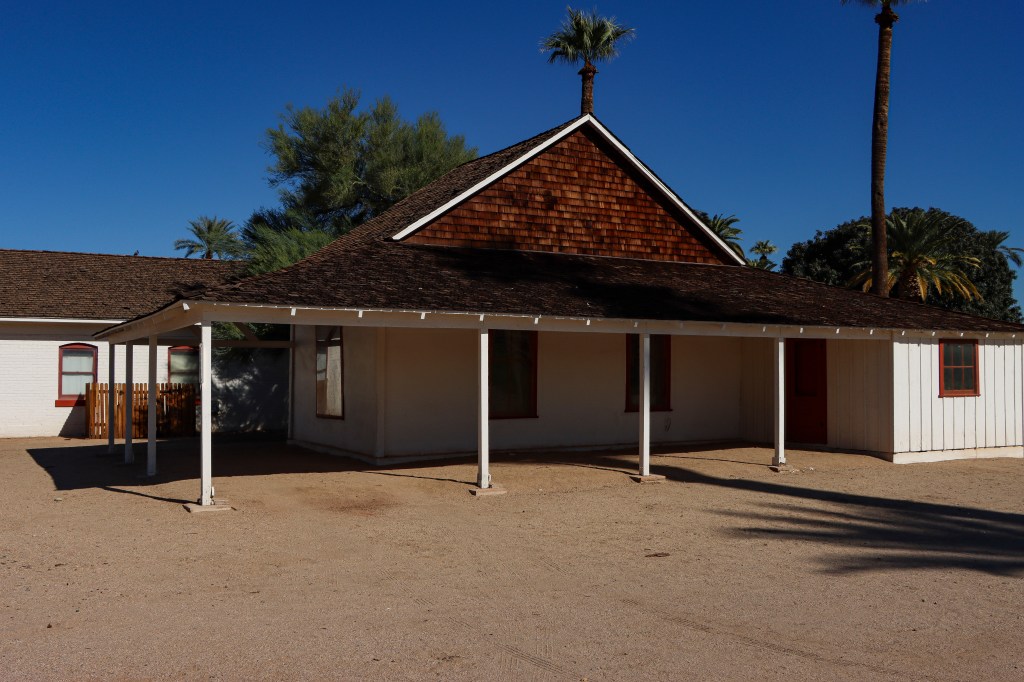
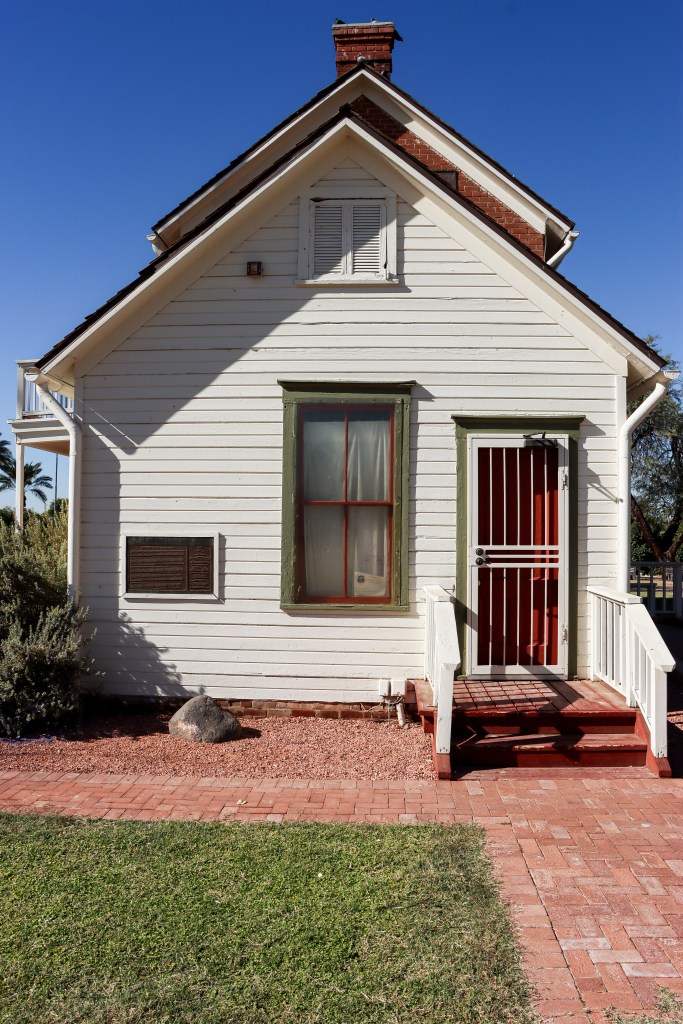
In 1881, the first structure in what was to become the ranch was built. It was an adobe house that served as the residence and office of Stephen H. Campbell, the first superintendent to manage the ranch. In 1895, the superintendent’s residence was relocated to the main house of the ranch, and the adobe house was converted to accommodate the ranch employees. Bartlett had his hired hands plant figs and other fruit orchards, vineyards, and alfalfa.
Other structures built on the ranch in the 1890s included the Foreman’s House, the blacksmith shop, and the horse barn. The Fruit Packing House, the largest packing house in the Salt River Valley, was built in 1891.
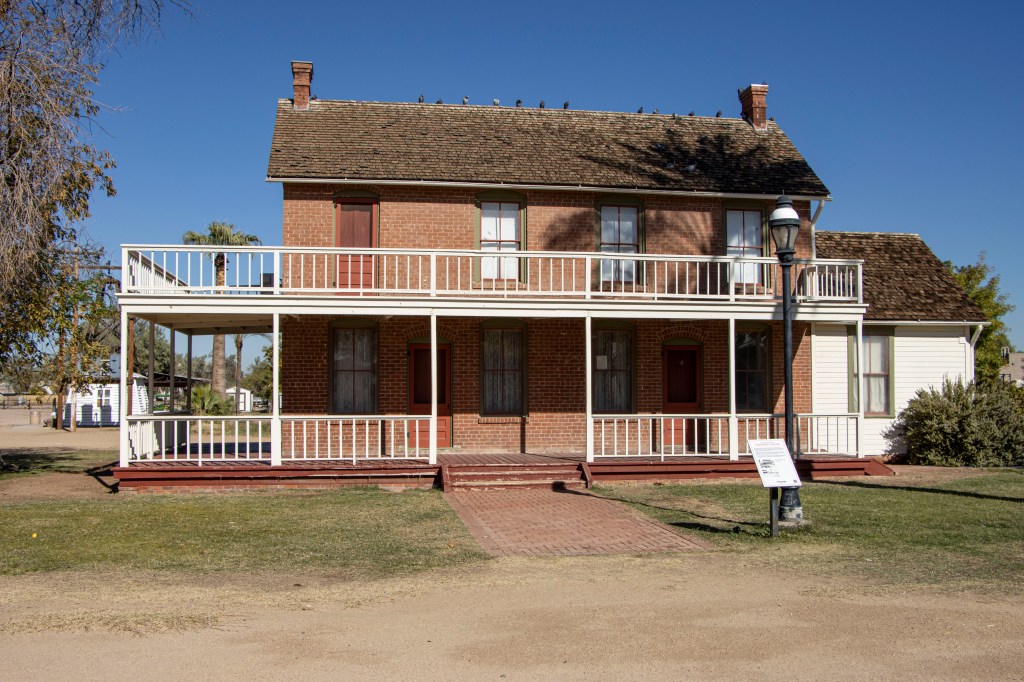
The farm animals raised on the ranch included cows, bulls, and hogs. Between 500 and 1,000 hogs were raised on the ranch in the 1890s. Horses and mules were used to pull orchard wagons, mowers, and rakes. The Guest House was built in 1898. When Bartlett’s youngest son was stricken with tuberculosis while living in Chicago, his doctor recommended that he move to a warmer climate. Bartlett had the guest house building designed to accommodate the needs and comforts of his son and family.[3][5]
In 1901, Bartlett had a pump house built for an oil-fired electrical generator. The pump house provided electricity to his ranch buildings with the help of a pump water. By 1905, the first automobiles were being used on the ranch, and Bartlett had a garage built to store his wagons and automobiles.
Bradshaw (1913 – 1927) and Smith (1927 – 1977) eras
In 1913, Peter E. Bradshaw purchased the ranch and planted long-staple cotton in 1915.
In 1927, Richard W. Smith purchased the ranch and planted prominent citrus and pecan orchards.
In 1928, Smith constructed a dairy barn and began raising dairy cows commercially. The milk from the cows was sold in bulk and shipped to local dairies in cans. Richard W. Smith died in 1944. His son, Richard S. Smith, inherited the farm and established a retail dairy on the ranch, known as the Sahuaro Jersey Dairy Milk House.
In the early 1960s, 120 acres of the ranch were sold to develop the Glendale Community College campus.
In 1966, the City of Glendale, under the initiative of then-Mayor Max Klass, began a process to purchase 80 acres of the original 640-acre ranch. In 1977, the purchase was made possible by a federal grant, and the City of Glendale proceeded to restore the historical structures on the ranch. After the City of Glendale purchased the land, Richard S. Smith was allowed to lease the ranch until 1980.
On March 7, 1980, Sahuaro Ranch was registered on the National Register of Historic Places after the city applied for the registration of 17 acres of the ranch. The ranch is open to the public and can be found at 9802 North 59th Avenue, Mountain View.
The Sahuaro Ranch Fire
In September 2017, the ranch site was hit with a string of fires on September 18, 23, and 26. The blacksmith shop, granary building, and the milk house, all caught fire and were permanently destroyed. This was a terrible loss of critical historical assets for the community. The park would be closed on September 26, 2017, to facilitate an investigation into the fires and reopened the following day.



 Throughtful Reader
Leave a comment