
During Eisenhower’s time, the Country was during the Korean War. (Foner) Eisenhower was able to bring a conclusion to that war which ended in an Armistice. (Foner) Also, in Foreign Affairs Eisenhower was able to find a way to reason with the Soviets. When Stalin died in 1953, he that with Nikita Kruschev he would be able to deal with him more diplomatically. (Foner) This is what is now known as the “thaw” in the Cold War. (Foner) Eisenhower also kept the US out of affairs that other Cold War warriors would have gotten us into, such as the uprising against communism in Hungary. (Foner) Eisenhower realized that “Containment” and not intervention would be the best way to address Soviet Domination. (Foner) Another situation was the was the war in the Suez Canal in Egypt. (Foner) In 1956, the British, French, and Israelis launched an invasion in Egypt because their Nationalist leader, Gamal Abbel Nasser had nationalized the Suez Canal. (Foner) Eisenhower immediately stepped in and was able to defuse the situation and end the invasion that was launched. With this move, Eisenhower was able to position the US companies to dominate the region’s oil fields and establish the US as a major Western power in the Middle East. (Foner) Eisenhower would also keep us out of assisting the French in Vietnam. The French were attempting to recapture colonies that were lost during the Second World War but were unable to conquer Ho Chi Minh’s Forces. (Foner) The US was originally paying 4/5’s of the cost, but in 1954 the US would back off when Eisenhower rejected the National Security Council’s advice to use nuclear weapons, (Foner) A couple of shortfalls though hit his foreign policy. In Guatemala, Jacobo Arbenz Guzman was elected. (Foner) He was a home grown nationalist. His policy towards nationalization would potentially impact the foreign controls over the fruit market. The administration had the CIA overthrow the government and install a leader that suited the US interests. (Foner) Another one was in Iran, where Mohammed Mossadegh was elected. Like Guzman, He was also a Nationalist, and attempted to nationalize the oil in Iran back to its people. Once again, the US would assist in the overthrow of Mossadegh, and install the Shah. (Foner) This would be a huge mistake, as it would plant the seeds for the eventual overthrow of the Shah with the Islamist Ayatollah Khomeini who was extremely anti America and end Iran-Us Relations in 1979. (Foner)
On the Domestic front, Eisenhower established a different kind of Republican direction. While conservatism was on the rise in the 1950s, Eisenhower realized that a more pragmatic approach was more appropriate. He would create what is now known as “Modern Republicanism”. (Foner) While he hired a lot of businessmen for his cabinet and was originally perceived as someone who would roll back “New Deal” policies, they would be for a rude awakening. (Foner) He would take the opposite approach and would shed the party’s legacy of Herbert Hoover’s conservatism that failed in the Depression. (Foner) At the time the core of the New Deal programs had not only survived but had expanded. In 1955, Agriculture workers became eligible for the first time for Social Security. (Foner) Eisenhower came to believe in the idea of “mixed enterprise”. The idea in which government played a major role in the planning of economic development. (Foner) The Administration also signed into Law the “National Defense Education Act”; they would allow for the first time direct federal funding to higher education. (Foner) In 1956 the “Federal Aid Highway Act” was signed into law. It would establish the modern day “Interstate highway system”. (Foner)
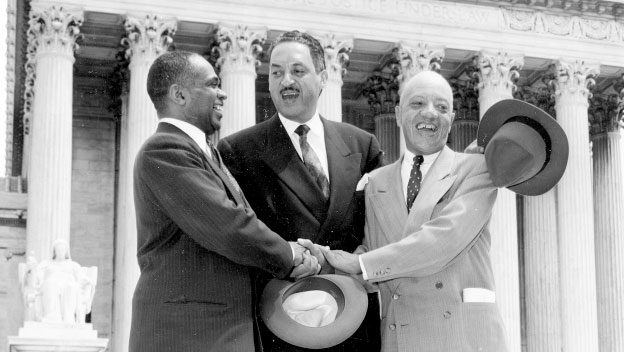
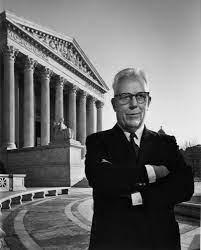
On Civil Rights, Eisenhower’s legacy is mixed. Though indifferent to the issue, Eisenhower did achieve some postive results. In 1957, Gov. Faubus of Arkansas use the National Guard to prevent integration in Little Rock’s Central high school, (Foner) To counter, the President sent in federal troops to squash this violation. The soldiers of the 101st Airborne Division and escorted 9 black children into the school. (Foner) Eisenhower’s impact was also felt during the “Brown vs Board of Education”. (Foner) The background of the case was brought about when Oliver Brown’s daughter was forced to walk across dangerous railroad tracks each morning to school, rather than being allowed to attend a nearby school for whites. (Foner) The Case would go all the way to the Supreme Court, where Brown would win their case. One pivotal reason why they won was the makeup of the Court. The Court was led by Earl Warren, former Gov. of California and was nominated by Eisenhower and approved by the Senate in 1953. (Foner) The court was divided, but Warren was able to create an “unanimity.” To protect the members who were against discrimination but were afraid to speak out. Warren himself read the ruling to shield them. Below, Thurgood Marshall, the lawyer who represented Brown and eventually became the 1st African American to become a Supreme Court Judge. To the right, Earl Warren. Warren would serve as Chief Justice until 1969. He would also oversee the successful ruling on “Loving vs Virginia” in 1967 that made interracial marriages allowed.
Finally, one last great act Eisenhower addressed, and is still in our collective conscious to this day, was his warning about the “Military Industrial Complex” in 1961. (Foner) During the 1960 campaign, John F Kennedy, who was running for President at the time falsely claimed that the US was suffering a “Missile Gap” with the Soviets. (Foner) In reality, the US far exceeded the Soviets in missile and Economic growth. (Foner) Eisenhower used this opportunity to warn about the dangers of an overinflated Military budget. He explained how a conjunction of “immense military embellishment”, and with a “permanent arms industry” with an influence felt in “every office”. (Foner) He would close this part of his speech with the sobering reminder of “We must never let the weight of this combination endanger our liberties or democratic processes”. (Foner)
Foner, Eric, et al. Give Me Liberty. 7th ed., vol. 2, W. W. Norton and Company, 2022


 Throughtful Reader
Leave a comment