While most Americans know of the “New Deal”. They don’t know that it was actually two parts to it. The first is the most common one. This established programs, such as the CCC (Civilian Conservation Groups). (HCE) It was used to create trails and shelters along the 800 parks in the US. We saw the TVA (Tennesse Valley Authority). (HCE). This was used for building the Damns that you see around the country now. He would also pass “Emergency Banking Act” that would reorganize the banks and would close the ones that were insolvent. (HCE) While these programs were successful for the time that they were needed Roosevelt began ambitions to build a more economic structure for Americans.
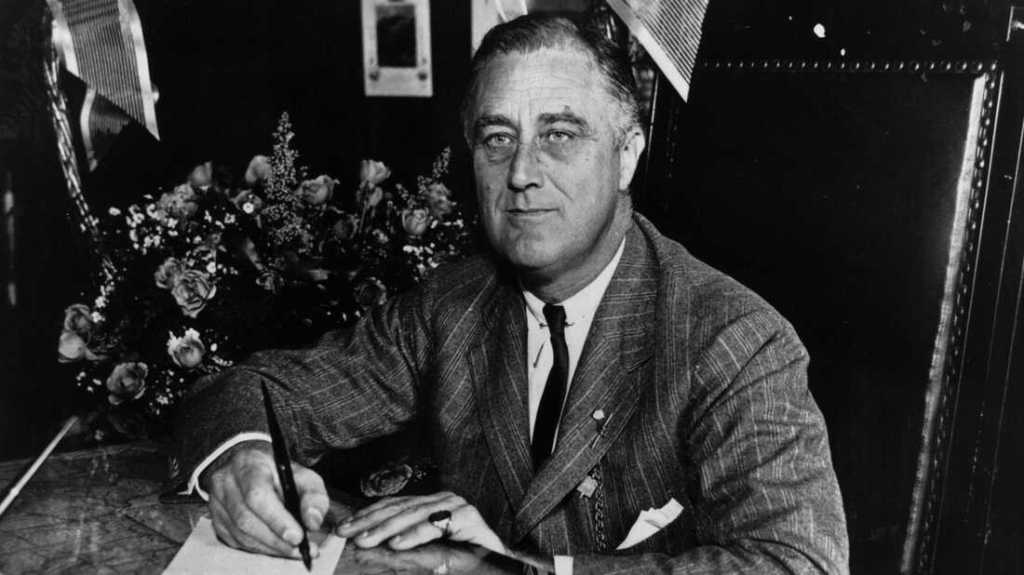
Despite those earlier succusses mentioned above. Roosevelt would encounter resistance from the Congress and the Supreme Court over several of his New Deal policies (Foner) However, his administration began to redefine what needs to be done to ensure economic security for Americans long term. They adapted their ideas to the problems of the time.
With that said, we entered what was called the “Second New Deal”. (Foner) During this time the Roosevelt administration signed several high important pieces of legislation and established programs to help Americans.
One of the first was the Rural Electrification Agency in 1935. (Foner) at that time 80% of American farms still didn’t have any electricity. (Foner) This would enable Americans to purchase up to date household appliances. By 1950 90% of the county’s farms had electricity. (Foner) This program was the one of the most successful of his programs passed.
The Workers Progress Administration passed in 1934. (Foner) The program hired 3 million from everywhere possible annually until it ended in 1943. (Foner) The program helped construct thousands of public bridges, and buildings, 500K miles of roads and 600 airports, (Foner) The WPA also had an impact on the arts. They would decorate buildings with murals and hire writers to produce local histories and guidebooks. (Foner)
In 1935 another act was passed that would assist Americans. “The National Labor Relations Act”. (HCE) Known as the “Wagner Act”, Sen. Robert Wagner who sponsored it. This bill created a relations board that would supervise Union elections and prevent employers from treating their workers negatively. (HCE)
Another piece of legislation was passed that continues to serve us today. The Social Security Act of 1935 was the first time the government would create a system of unemployed insurance, pensions. (Foner) it would aid people who were disabled, poor, and the elderly, and families with dependent children. (Foner) This was an original idea as it was first proposed on the “Progressive platform of 1912.” (Foner) This policy alone would help create what is now referred to as the “Welfare State”. It was a term that originated in Britain during the second World War as a reference to a system of income assistance. (Foner) There was also an attempt at installing a national system of health insurance. The idea as abandoned when the American Medical Association offered strong opposition because of the fear of potential regulation on their activities and profits. (Foner)
Another and a final big one that was passed was the “United States Housing Act” in 1937. (Foner) This was also a first that tried to build homes for the “poorest Americans.”
While not all of Roosevelt’s policies were able to become a reality, he did however offer Americans hope and for the first time ever Economic security. His administration saw the need for fail safes and long-term resolutions rather than short term fixes.
HCE New Deal – Programs, Social Security & FDR | HISTORY
Foner, Eric, et al. Give Me Liberty. 7th ed., vol. 2, W. W. Norton and Company, 2022

 Throughtful Reader
Leave a comment